RPM Requirements in 2026 Explained

OnCare360
Dec 10, 2025
Remote Patient Monitoring (RPM) requirements in 2026 introduce new billing codes, flexible thresholds, and compliance standards to support shorter monitoring periods and briefer clinical interactions. These updates address operational challenges faced by healthcare providers, such as uncompensated care and rigid billing rules, while increasing audit scrutiny.
For physician groups, MSOs, and value-based care leaders, the 2026 changes enhance care delivery options while demanding precise documentation and updated workflows. This article covers the new codes, compliance strategies, and financial opportunities, providing actionable insights to navigate these updates effectively.
RPM CPT Codes and 2026 Updates
RPM CPT Codes 2026: Billing Requirements and Reimbursement Rates
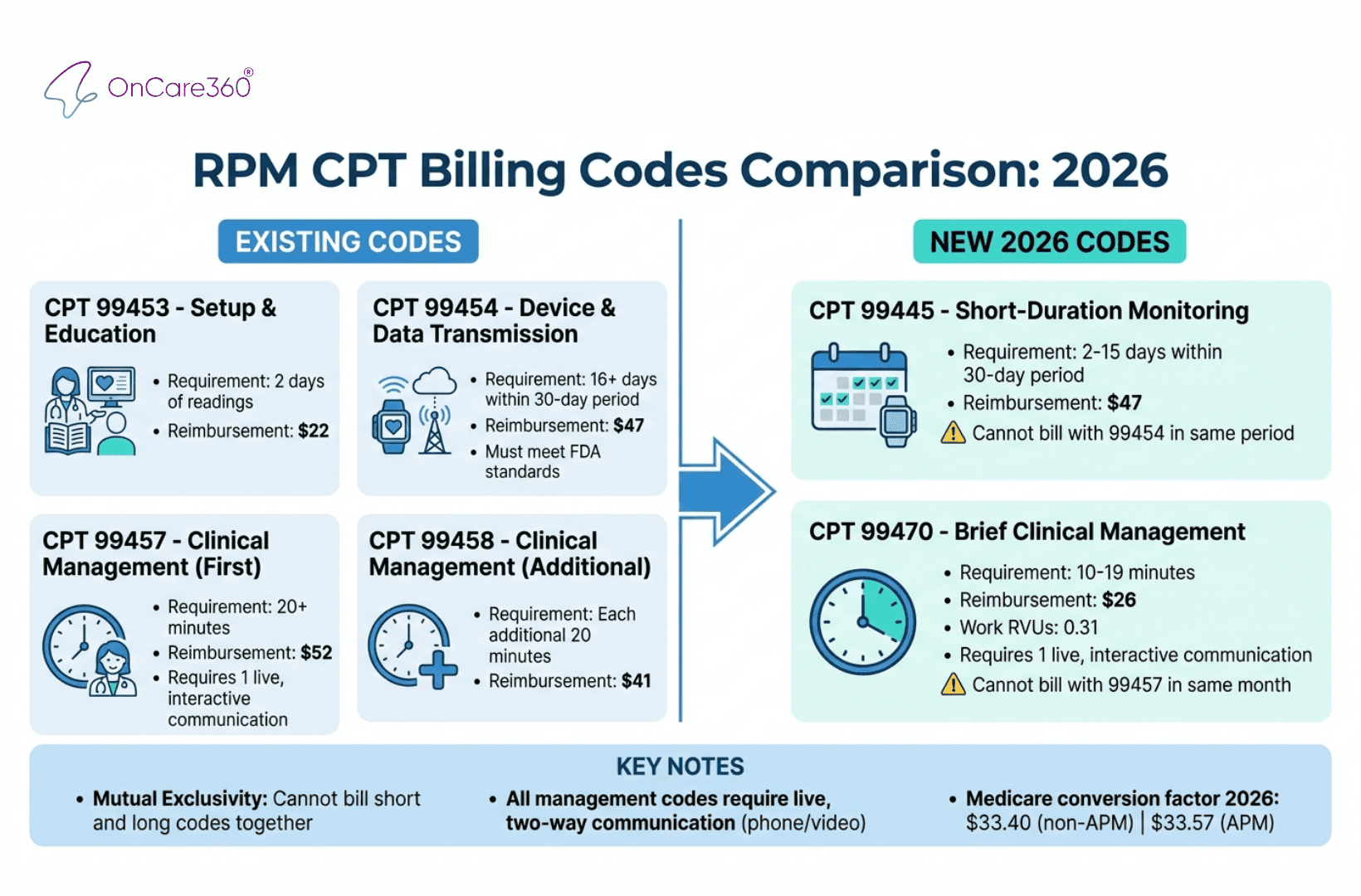
The 2026 Physician Fee Schedule introduces two new RPM billing codes - CPT 99445 and CPT 99470 - offering providers more flexibility for billing shorter monitoring periods and clinical interactions. These changes move away from the strict requirements of 16 days of device data and 20 minutes of clinical time, making it easier to address episodic care scenarios. Below is a breakdown of these updates and their billing specifics.
Core RPM Codes: 99453, 99454, 99457, 99458
The main RPM codes remain unchanged for 2026 but come with updated thresholds. CPT 99453, which covers setup and patient education, now requires only two days of readings before billing. This code reimburses $22 once data has been transmitted for at least two days.
CPT 99454 continues to cover device supply and data transmission for 16 or more days within a 30-day period, with a reimbursement of $47. Devices must meet FDA standards and automatically transmit physiologic data.
For clinical management, CPT 99457 reimburses $52 for the first 20 minutes of treatment management, while CPT 99458 provides $41 for each additional 20-minute increment. Both management codes require at least one live, interactive communication (via phone or video) between the care team and the patient each month. Asynchronous messages do not meet this requirement.
New Codes for Shorter Monitoring Periods
CPT 99445 allows providers to bill for 2 to 15 days of data transmission within a 30-day period, reimbursing $47 - the same rate as the longer-duration code, reflecting consistent device costs.
CPT 99470 introduces a new tier for clinical management, covering 10 to 19 minutes of clinical time per month. This code is valued at 0.31 work RVUs and reimburses $26, approximately half the rate of the 20-minute code. Like other management codes, it requires at least one live, two-way interaction.
"By recognizing shorter monitoring windows and smaller time increments, CMS is rewarding meaningful engagement instead of arbitrary thresholds." - Vivo Care
These new codes cannot be billed alongside their longer-duration counterparts. For instance, providers cannot bill both 99445 and 99454 within the same 30-day period, nor can 99470 be billed alongside 99457 in the same calendar month. These updates will require providers to adjust billing practices and workflows accordingly.
What These Changes Mean for Providers
With these updates, providers can now bill for interactions that previously didn’t meet the 16-day and 20-minute thresholds. This change potentially increases RPM revenue by capturing previously unbillable interactions, with some estimates suggesting a 38% revenue boost. However, these opportunities come with the need for operational adjustments.
Providers should update RPM platforms to track data transmissions in 2–15 day windows and clinical time in 10-minute increments. Billing teams must understand the mutual exclusivity rules to avoid errors when submitting claims. Documentation must also include clear records of the date, method, and summary of every live, two-way communication for management codes.
"Clinicians can now bill for fewer monitoring days or shorter management time and do so without losing compliance." - Daniel Tashnek, JD, CEO of Prevounce
Despite these expanded billing options, the Office of Inspector General is increasing audit scrutiny on RPM claims, focusing on medical necessity documentation and high-volume billing patterns. Practices should also review vendor contracts to ensure third-party RPM providers are not adjusting fees or service terms in response to the 2026 updates.
Compliance and Documentation Standards for 2026
The 2026 updates to Remote Patient Monitoring (RPM) bring increased billing flexibility but also heightened regulatory oversight. Federal auditors are zeroing in on areas like medical necessity documentation, patient consent workflows, and high-volume billing trends. To navigate these changes, practices must maintain thorough, audit-ready records that justify every claim, particularly when using the new short-duration codes. These compliance requirements demand precise documentation practices to support each RPM claim.
Time Tracking and Consent Requirements
Accurate time tracking is a cornerstone of the updated RPM billing framework. For CPT 99470, providers need to document 10 to 19 minutes of clinical management time per month, while CPT 99457 requires at least 20 minutes. Time spent on activities such as data review, care plan adjustments, and patient education must be carefully recorded, along with evidence of at least one live, interactive communication each month.
"Interactive communication... involves, at a minimum, real-time synchronous, two-way audio interaction that is capable of being enhanced with video." - CMS
Patient consent is another critical compliance area. Before initiating RPM, providers must document that the patient has been informed about the service, data usage, and their right to opt out. Consent forms should be stored in the patient’s medical record and include details such as the date, method of communication, and confirmation of the patient’s acknowledgment. Recent audits have flagged insufficient consent documentation as a common compliance issue.
Eligibility Verification and Medical Necessity
With the expanded billing options, providers must ensure that every RPM claim is backed by clear clinical justification. Documentation should outline why remote monitoring is necessary for managing a chronic or acute condition, such as hypertension management, medication adjustments post-discharge, or post-surgical recovery monitoring. The 2026 updates broaden eligibility criteria, now covering short-term and episodic care in addition to chronic conditions lasting 12 months. However, patients must generally have an established relationship with the practice - meaning they’ve undergone a prior new patient evaluation - before RPM services can begin.
Insurance eligibility verification is equally important. Practices must confirm that the patient’s condition meets payer-specific criteria to avoid denials. The Office of Inspector General (OIG) is closely monitoring RPM clinics that accept referred patients and bill under their own NPIs without an established patient relationship.
How to Maintain Audit-Ready Documentation
Strong documentation practices are essential for RPM compliance. Audit-ready records should include detailed logs of all billable activities, specifying the date, time, communication method, duration, and a summary of the clinical discussion. Practices must also track data transmission days within each 30-day billing cycle to ensure accurate claims and compliance with audit requirements.
Automated RPM platforms can help streamline compliance by logging time, tracking device usage, generating reports, and enforcing payer-specific rules. Additionally, practices should maintain documentation confirming that all medical devices used meet FDA standards and support automatic digital data uploads.
"For compliant programs, the message is clear: continue to document thoroughly, use technology that enforces payer rules, and partner only with vendors that maintain strict medical-necessity standards." - Daniel Tashnek, JD, Co-founder of Prevounce Health
Regular internal audits are a proactive way to identify and address compliance gaps. This includes reviewing patient lists, billing records, and clinical notes to ensure that all live interactions are documented, time logs align with billed codes, and medical necessity is clearly outlined in each patient’s care plan. By staying vigilant, practices can reduce risks and maintain adherence to the updated RPM standards.
How to Implement RPM Requirements in Your Practice
Implementing the 2026 Remote Patient Monitoring (RPM) requirements calls for a well-structured approach that prioritizes clinical quality, operational efficiency, and regulatory compliance. With RPM claim volumes surging by 1,300% between 2019 and 2023, practices must prepare for both growth and the increased scrutiny that comes with it. The key lies in creating scalable workflows, ensuring thorough documentation, and leveraging technology to streamline operations while maintaining compliance.
Building Scalable RPM Workflows
To build efficient RPM workflows, integrate the new short-duration codes into your processes to address acute and transitional care episodes. Standardize documentation practices across all patient records. Each record should include essential details such as the beneficiary ID, date of service, documented medical necessity for the monitored condition, patient consent, and explanations for any non-standard abbreviations. By adhering to general supervision guidelines, clinical staff like nurses or medical assistants can handle routine care coordination tasks, allowing physicians to concentrate on more complex cases.
The 2026 rule permitting virtual direct supervision introduces greater flexibility by allowing supervising physicians to be "immediately available" via real-time audio-video technology rather than requiring physical presence. This change enables distributed clinical teams to operate more effectively. Practices should implement automated alerts to monitor partial adherence and minimize revenue loss. These foundational workflow improvements pave the way for integrating advanced technology to further enhance efficiency.
Using Technology to Improve Efficiency
Technology plays a pivotal role in scaling RPM programs while ensuring compliance. Automated platforms like OnCare360 simplify daily operations by tracking compliance, automating time logs, monitoring data transmission days, and providing code recommendations based on patient monitoring patterns. These tools help ensure accurate billing for the new 2026 codes while adhering to payer-specific rules and maintaining medical-necessity standards in response to recent concerns raised by the Office of Inspector General (OIG).
Ensure all monitoring devices meet FDA standards and support automatic digital data uploads, as self-reported data remains ineligible for RPM billing. OnCare360’s cellular, medical-grade devices eliminate common setup challenges by removing the need for Wi-Fi or patient app downloads. Additionally, its AI-driven care coordination features flag risks and provide documentation cues, enabling smaller teams to manage large patient panels efficiently without compromising care quality.
The Centers for Medicare & Medicaid Services (CMS) has underscored the importance of software-as-a-service, cloud storage, and robust cybersecurity as integral to modern digital care models. Practices should ensure their technology infrastructure includes seamless EHR integration, automated consent workflows, and secure electronic signature capabilities to maintain audit readiness.
"For compliant programs, the message is clear: continue to document thoroughly, use technology that enforces payer rules, and partner only with vendors that maintain strict medical-necessity standards." - Daniel Tashnek, JD, Co-founder of Prevounce Health
Training Your Team for the New Requirements
Proper training is essential for ensuring compliance with the updated RPM codes. Clinical staff must be well-versed in time tracking protocols, live interactive communication requirements for management codes, and device compliance verification. They should also be trained to obtain and document patient consent during service delivery and maintain precise time logs for all non-face-to-face interactions. With virtual direct supervision now a permanent option, teams must ensure that supervising physicians are accessible via real-time audio-video technology when needed.
It’s also critical to differentiate between physiologic monitoring (RPM) and therapeutic monitoring (RTM), as these services cannot be billed simultaneously for the same patient within the same period. Digital platforms that automatically track clinical staff time can help ensure compliance with the new time thresholds. OnCare360, for example, offers structured care pathways and built-in documentation prompts that guide staff through compliant workflows. This reduces manual effort and supports the audit-ready documentation practices required for 2026 compliance.
The Financial Impact of RPM in 2026
The 2026 updates to Remote Patient Monitoring (RPM) bring new opportunities for financial growth by refining workflows, improving compliance, and introducing short-duration billing codes. These changes, combined with a 3.25% increase in the Medicare conversion factor, open up additional revenue streams and cost-saving measures, particularly for shorter monitoring periods.
Revenue Opportunities with New Codes
The introduction of new billing tiers, such as CPT 99445 and CPT 99470, allows providers to capture revenue from shorter clinical interactions that previously went unbilled. For example, a clinic in Upstate New York managing 522 patients with hypertension and diabetes discovered that under the 2025 rules, 16% of patients with 2–15 readings and 6% receiving only 10–20 minutes of staff time generated no reimbursement. However, with the 2026 billing structure, the clinic anticipates an annual revenue increase of approximately $101,124. Additionally, the Medicare conversion factor rises to $33.40 for non-APM participants and $33.57 for APM participants, further boosting potential earnings.
"The 2026 PFS final rule... has changed the RPM equation in a few very positive ways. A higher conversion factor and new code flexibility make it easier than ever for compliant RPM programs to deliver measurable financial returns." - Daniel Tashnek, JD, Co-Founder and CEO, Prevounce Health
Research shows that practices typically see a 3× to 5× return on their investments in RPM technology and staffing. Monthly revenue per patient ranges from $120 to $150, with annual reimbursement reaching approximately $1,728 per enrolled patient. For a practice managing 100 RPM patients, this translates to estimated annual revenue between $144,000 and $180,000. Beyond revenue, these updates also contribute to better patient outcomes and operational efficiencies.
Better Outcomes and Lower Costs
RPM has demonstrated its ability to significantly improve patient outcomes, reducing emergency room visits by 30–50% and hospital readmissions by up to 76% in populations with chronic conditions. The 2026 updates allow providers to monitor patients during critical periods, such as post-surgery recovery or medication changes, for just 2–15 days. This facilitates early intervention, helping clinicians address complications before they escalate. Additionally, the new 10-minute management code ensures that even brief but clinically relevant interactions are reimbursed.
Operational costs are also reduced through virtual direct supervision, which eliminates the need for on-site presence and allows distributed teams to operate more efficiently. Tools like OnCare360's AI-driven platform further enhance productivity by automatically flagging risks and providing documentation cues, enabling small teams to manage larger patient panels without compromising on quality or audit readiness.
Aligning RPM with Value-Based Care Models
The 2026 regulations strengthen RPM's alignment with value-based care by prioritizing continuous monitoring and early intervention. The flexibility to bill for shorter monitoring periods and incremental management supports models like ACCESS and TEAM. By leveraging real-time patient data, organizations can close care gaps, improve quality measures, and lower overall healthcare costs.
"These updates strengthen RPM's role in value-based care by rewarding continuous monitoring, early intervention, and improved patient outcomes rather than service volume." - Kencor Health
Additional APCM add-on codes (G0568, G0569, G0570) simplify integrated behavioral health billing by removing strict time-tracking requirements. CMS's decision to use Outpatient Prospective Payment System (OPPS) data to value device supply codes better reflects modern costs, including SaaS, cloud storage, and cybersecurity. Practices focusing on high-risk populations - such as those with heart failure or COPD - and utilizing automated documentation tools can achieve both fee-for-service revenue and strong performance in value-based care metrics.
Preparing for RPM Success in 2026
The updates to Remote Patient Monitoring (RPM) in 2026 bring a mix of new opportunities and compliance challenges. To stay ahead, practices must act promptly on three key priorities: adopting the updated billing codes, ensuring audit-ready documentation, and developing scalable workflows that integrate technology without compromising care quality. Aligning workflows with these new requirements is essential for maintaining compliance and optimizing revenue. This strategic approach sets the stage for smoother billing processes and stronger regulatory adherence.
Start by incorporating CPT 99445 (2–15 days of monitoring) and CPT 99470 (10–19 minutes of management) into your billing systems. These codes enable practices to bill for shorter monitoring periods, which were previously unreimbursed, such as during post-discharge recovery or medication adjustments. Update your documentation templates to meet compliance standards, ensuring they capture transmission details, records of interactive communication, and clear evidence of medical necessity. Each record must also include proof of patient consent obtained at the time of service.
"For physicians practices and other providers with remote care programs, 2026 offers both opportunity and accountability - new revenue potential through expanded code use, but also the need to maintain airtight compliance and operational efficiency." - Daniel Tashnek, JD, Co-founder, Prevounce Health
Ensure all devices used in your RPM program are FDA-approved and capable of automatic digital data uploads. Partner with RPM vendors that adhere to strict medical necessity guidelines and offer automated time-logging features to minimize audit risks. Take advantage of the permanent virtual direct supervision flexibility, allowing supervising physicians to be available via real-time audio-video rather than being physically present. This flexibility supports distributed teams and enhances scalability. Device compliance is a foundational element for creating efficient, tech-driven workflows.
Train your clinical team on supervision requirements, emphasizing that interactive communication must involve live, synchronous two-way audio at a minimum - text messaging or asynchronous chats do not meet this standard. Regularly conduct internal audits to review documentation for key elements such as beneficiary identification, date of service, and proof of medical necessity. These steps will help prepare your practice for increased oversight from the Office of Inspector General (OIG), which is already intensifying its focus on compliance.
FAQs
What changes to RPM billing codes will affect reimbursement rates in 2026?
In 2026, updates to CPT codes will broaden reimbursement options for Remote Patient Monitoring (RPM), offering new ways for providers to secure payment for their services. CPT 99445 allows reimbursement for 2–15 days of monitoring, with an approximate payment of $47, while CPT 99470 covers 10–19 minutes of clinical management, reimbursed at about $26. These additions provide opportunities to bill for shorter RPM durations, making reimbursement more accessible.
Healthcare organizations can use these new codes to strengthen their RPM programs and advance value-based care efforts. However, to fully benefit from these changes, maintaining thorough documentation and adhering to compliance standards will be essential.
What are the updated compliance requirements for Remote Patient Monitoring (RPM) in 2026?
The 2026 CMS updates bring tighter compliance requirements for Remote Patient Monitoring (RPM), particularly around billing, documentation, and audit readiness. Providers need to capture 2 to 15 days of data to bill under the new short-duration code (CPT 99445) or 16 to 30 days for the traditional device-supply code (CPT 99454) within a 30-day billing period. Clinical management services must include a minimum of 10 minutes per month for CPT 99470 or 20 minutes for CPT 99457.
To stay compliant, providers must maintain thorough documentation, including patient consent, onboarding, and device setup (CPT 99453). Detailed records of data uploads, device supply timelines, and patient interactions are also required. Programs should integrate with electronic health records (EHRs) to securely capture and report data. Additionally, providers need to document patient education, device calibration, and clinical decisions based on the transmitted data to meet Medicare audit standards and support value-based care initiatives.
What steps can providers take to ensure compliance with the updated RPM documentation standards for 2026?
To meet the 2026 RPM documentation standards and maintain compliance with CMS requirements, it's essential to establish a structured workflow. Begin by securing and documenting explicit patient consent during the enrollment process. This should include the date of consent, the staff member involved, and acknowledgment of any cost-sharing obligations. Ensure this documentation is stored securely within your EHR system for quick access during audits.
Precise tracking of clinical staff time is another critical component. Record start and stop times, staff roles, and a brief summary of activities performed. Leveraging automated tools integrated into your RPM platform can simplify this process, ensuring accurate documentation of the required minimum minutes. Additionally, carefully document device usage and data transmission details in alignment with the updated CPT codes. This includes noting the exact number of days data was collected and specifying the type of device used.
To stay organized and audit-ready, maintain a centralized repository for all RPM-related records, such as consent forms, time logs, and device documentation. Conduct regular internal reviews or mock audits to identify potential gaps and address them proactively, minimizing the risk of claim denials while ensuring your program operates smoothly.
RPM CPT Codes 2026: Billing Requirements and Reimbursement Rates
The 2026 Physician Fee Schedule introduces two new RPM billing codes - CPT 99445 and CPT 99470 - offering providers more flexibility for billing shorter monitoring periods and clinical interactions. These changes move away from the strict requirements of 16 days of device data and 20 minutes of clinical time, making it easier to address episodic care scenarios. Below is a breakdown of these updates and their billing specifics.
Core RPM Codes: 99453, 99454, 99457, 99458
The main RPM codes remain unchanged for 2026 but come with updated thresholds. CPT 99453, which covers setup and patient education, now requires only two days of readings before billing. This code reimburses $22 once data has been transmitted for at least two days.
CPT 99454 continues to cover device supply and data transmission for 16 or more days within a 30-day period, with a reimbursement of $47. Devices must meet FDA standards and automatically transmit physiologic data.
For clinical management, CPT 99457 reimburses $52 for the first 20 minutes of treatment management, while CPT 99458 provides $41 for each additional 20-minute increment. Both management codes require at least one live, interactive communication (via phone or video) between the care team and the patient each month. Asynchronous messages do not meet this requirement.
New Codes for Shorter Monitoring Periods
CPT 99445 allows providers to bill for 2 to 15 days of data transmission within a 30-day period, reimbursing $47 - the same rate as the longer-duration code, reflecting consistent device costs.
CPT 99470 introduces a new tier for clinical management, covering 10 to 19 minutes of clinical time per month. This code is valued at 0.31 work RVUs and reimburses $26, approximately half the rate of the 20-minute code. Like other management codes, it requires at least one live, two-way interaction.
"By recognizing shorter monitoring windows and smaller time increments, CMS is rewarding meaningful engagement instead of arbitrary thresholds." - Vivo Care
These new codes cannot be billed alongside their longer-duration counterparts. For instance, providers cannot bill both 99445 and 99454 within the same 30-day period, nor can 99470 be billed alongside 99457 in the same calendar month. These updates will require providers to adjust billing practices and workflows accordingly.
What These Changes Mean for Providers
With these updates, providers can now bill for interactions that previously didn’t meet the 16-day and 20-minute thresholds. This change potentially increases RPM revenue by capturing previously unbillable interactions, with some estimates suggesting a 38% revenue boost. However, these opportunities come with the need for operational adjustments.
Providers should update RPM platforms to track data transmissions in 2–15 day windows and clinical time in 10-minute increments. Billing teams must understand the mutual exclusivity rules to avoid errors when submitting claims. Documentation must also include clear records of the date, method, and summary of every live, two-way communication for management codes.
"Clinicians can now bill for fewer monitoring days or shorter management time and do so without losing compliance." - Daniel Tashnek, JD, CEO of Prevounce
Despite these expanded billing options, the Office of Inspector General is increasing audit scrutiny on RPM claims, focusing on medical necessity documentation and high-volume billing patterns. Practices should also review vendor contracts to ensure third-party RPM providers are not adjusting fees or service terms in response to the 2026 updates.
Compliance and Documentation Standards for 2026
The 2026 updates to Remote Patient Monitoring (RPM) bring increased billing flexibility but also heightened regulatory oversight. Federal auditors are zeroing in on areas like medical necessity documentation, patient consent workflows, and high-volume billing trends. To navigate these changes, practices must maintain thorough, audit-ready records that justify every claim, particularly when using the new short-duration codes. These compliance requirements demand precise documentation practices to support each RPM claim.
Time Tracking and Consent Requirements
Accurate time tracking is a cornerstone of the updated RPM billing framework. For CPT 99470, providers need to document 10 to 19 minutes of clinical management time per month, while CPT 99457 requires at least 20 minutes. Time spent on activities such as data review, care plan adjustments, and patient education must be carefully recorded, along with evidence of at least one live, interactive communication each month.
"Interactive communication... involves, at a minimum, real-time synchronous, two-way audio interaction that is capable of being enhanced with video." - CMS
Patient consent is another critical compliance area. Before initiating RPM, providers must document that the patient has been informed about the service, data usage, and their right to opt out. Consent forms should be stored in the patient’s medical record and include details such as the date, method of communication, and confirmation of the patient’s acknowledgment. Recent audits have flagged insufficient consent documentation as a common compliance issue.
Eligibility Verification and Medical Necessity
With the expanded billing options, providers must ensure that every RPM claim is backed by clear clinical justification. Documentation should outline why remote monitoring is necessary for managing a chronic or acute condition, such as hypertension management, medication adjustments post-discharge, or post-surgical recovery monitoring. The 2026 updates broaden eligibility criteria, now covering short-term and episodic care in addition to chronic conditions lasting 12 months. However, patients must generally have an established relationship with the practice - meaning they’ve undergone a prior new patient evaluation - before RPM services can begin.
Insurance eligibility verification is equally important. Practices must confirm that the patient’s condition meets payer-specific criteria to avoid denials. The Office of Inspector General (OIG) is closely monitoring RPM clinics that accept referred patients and bill under their own NPIs without an established patient relationship.
How to Maintain Audit-Ready Documentation
Strong documentation practices are essential for RPM compliance. Audit-ready records should include detailed logs of all billable activities, specifying the date, time, communication method, duration, and a summary of the clinical discussion. Practices must also track data transmission days within each 30-day billing cycle to ensure accurate claims and compliance with audit requirements.
Automated RPM platforms can help streamline compliance by logging time, tracking device usage, generating reports, and enforcing payer-specific rules. Additionally, practices should maintain documentation confirming that all medical devices used meet FDA standards and support automatic digital data uploads.
"For compliant programs, the message is clear: continue to document thoroughly, use technology that enforces payer rules, and partner only with vendors that maintain strict medical-necessity standards." - Daniel Tashnek, JD, Co-founder of Prevounce Health
Regular internal audits are a proactive way to identify and address compliance gaps. This includes reviewing patient lists, billing records, and clinical notes to ensure that all live interactions are documented, time logs align with billed codes, and medical necessity is clearly outlined in each patient’s care plan. By staying vigilant, practices can reduce risks and maintain adherence to the updated RPM standards.
How to Implement RPM Requirements in Your Practice
Implementing the 2026 Remote Patient Monitoring (RPM) requirements calls for a well-structured approach that prioritizes clinical quality, operational efficiency, and regulatory compliance. With RPM claim volumes surging by 1,300% between 2019 and 2023, practices must prepare for both growth and the increased scrutiny that comes with it. The key lies in creating scalable workflows, ensuring thorough documentation, and leveraging technology to streamline operations while maintaining compliance.
Building Scalable RPM Workflows
To build efficient RPM workflows, integrate the new short-duration codes into your processes to address acute and transitional care episodes. Standardize documentation practices across all patient records. Each record should include essential details such as the beneficiary ID, date of service, documented medical necessity for the monitored condition, patient consent, and explanations for any non-standard abbreviations. By adhering to general supervision guidelines, clinical staff like nurses or medical assistants can handle routine care coordination tasks, allowing physicians to concentrate on more complex cases.
The 2026 rule permitting virtual direct supervision introduces greater flexibility by allowing supervising physicians to be "immediately available" via real-time audio-video technology rather than requiring physical presence. This change enables distributed clinical teams to operate more effectively. Practices should implement automated alerts to monitor partial adherence and minimize revenue loss. These foundational workflow improvements pave the way for integrating advanced technology to further enhance efficiency.
Using Technology to Improve Efficiency
Technology plays a pivotal role in scaling RPM programs while ensuring compliance. Automated platforms like OnCare360 simplify daily operations by tracking compliance, automating time logs, monitoring data transmission days, and providing code recommendations based on patient monitoring patterns. These tools help ensure accurate billing for the new 2026 codes while adhering to payer-specific rules and maintaining medical-necessity standards in response to recent concerns raised by the Office of Inspector General (OIG).
Ensure all monitoring devices meet FDA standards and support automatic digital data uploads, as self-reported data remains ineligible for RPM billing. OnCare360’s cellular, medical-grade devices eliminate common setup challenges by removing the need for Wi-Fi or patient app downloads. Additionally, its AI-driven care coordination features flag risks and provide documentation cues, enabling smaller teams to manage large patient panels efficiently without compromising care quality.
The Centers for Medicare & Medicaid Services (CMS) has underscored the importance of software-as-a-service, cloud storage, and robust cybersecurity as integral to modern digital care models. Practices should ensure their technology infrastructure includes seamless EHR integration, automated consent workflows, and secure electronic signature capabilities to maintain audit readiness.
"For compliant programs, the message is clear: continue to document thoroughly, use technology that enforces payer rules, and partner only with vendors that maintain strict medical-necessity standards." - Daniel Tashnek, JD, Co-founder of Prevounce Health
Training Your Team for the New Requirements
Proper training is essential for ensuring compliance with the updated RPM codes. Clinical staff must be well-versed in time tracking protocols, live interactive communication requirements for management codes, and device compliance verification. They should also be trained to obtain and document patient consent during service delivery and maintain precise time logs for all non-face-to-face interactions. With virtual direct supervision now a permanent option, teams must ensure that supervising physicians are accessible via real-time audio-video technology when needed.
It’s also critical to differentiate between physiologic monitoring (RPM) and therapeutic monitoring (RTM), as these services cannot be billed simultaneously for the same patient within the same period. Digital platforms that automatically track clinical staff time can help ensure compliance with the new time thresholds. OnCare360, for example, offers structured care pathways and built-in documentation prompts that guide staff through compliant workflows. This reduces manual effort and supports the audit-ready documentation practices required for 2026 compliance.
The Financial Impact of RPM in 2026
The 2026 updates to Remote Patient Monitoring (RPM) bring new opportunities for financial growth by refining workflows, improving compliance, and introducing short-duration billing codes. These changes, combined with a 3.25% increase in the Medicare conversion factor, open up additional revenue streams and cost-saving measures, particularly for shorter monitoring periods.
Revenue Opportunities with New Codes
The introduction of new billing tiers, such as CPT 99445 and CPT 99470, allows providers to capture revenue from shorter clinical interactions that previously went unbilled. For example, a clinic in Upstate New York managing 522 patients with hypertension and diabetes discovered that under the 2025 rules, 16% of patients with 2–15 readings and 6% receiving only 10–20 minutes of staff time generated no reimbursement. However, with the 2026 billing structure, the clinic anticipates an annual revenue increase of approximately $101,124. Additionally, the Medicare conversion factor rises to $33.40 for non-APM participants and $33.57 for APM participants, further boosting potential earnings.
"The 2026 PFS final rule... has changed the RPM equation in a few very positive ways. A higher conversion factor and new code flexibility make it easier than ever for compliant RPM programs to deliver measurable financial returns." - Daniel Tashnek, JD, Co-Founder and CEO, Prevounce Health
Research shows that practices typically see a 3× to 5× return on their investments in RPM technology and staffing. Monthly revenue per patient ranges from $120 to $150, with annual reimbursement reaching approximately $1,728 per enrolled patient. For a practice managing 100 RPM patients, this translates to estimated annual revenue between $144,000 and $180,000. Beyond revenue, these updates also contribute to better patient outcomes and operational efficiencies.
Better Outcomes and Lower Costs
RPM has demonstrated its ability to significantly improve patient outcomes, reducing emergency room visits by 30–50% and hospital readmissions by up to 76% in populations with chronic conditions. The 2026 updates allow providers to monitor patients during critical periods, such as post-surgery recovery or medication changes, for just 2–15 days. This facilitates early intervention, helping clinicians address complications before they escalate. Additionally, the new 10-minute management code ensures that even brief but clinically relevant interactions are reimbursed.
Operational costs are also reduced through virtual direct supervision, which eliminates the need for on-site presence and allows distributed teams to operate more efficiently. Tools like OnCare360's AI-driven platform further enhance productivity by automatically flagging risks and providing documentation cues, enabling small teams to manage larger patient panels without compromising on quality or audit readiness.
Aligning RPM with Value-Based Care Models
The 2026 regulations strengthen RPM's alignment with value-based care by prioritizing continuous monitoring and early intervention. The flexibility to bill for shorter monitoring periods and incremental management supports models like ACCESS and TEAM. By leveraging real-time patient data, organizations can close care gaps, improve quality measures, and lower overall healthcare costs.
"These updates strengthen RPM's role in value-based care by rewarding continuous monitoring, early intervention, and improved patient outcomes rather than service volume." - Kencor Health
Additional APCM add-on codes (G0568, G0569, G0570) simplify integrated behavioral health billing by removing strict time-tracking requirements. CMS's decision to use Outpatient Prospective Payment System (OPPS) data to value device supply codes better reflects modern costs, including SaaS, cloud storage, and cybersecurity. Practices focusing on high-risk populations - such as those with heart failure or COPD - and utilizing automated documentation tools can achieve both fee-for-service revenue and strong performance in value-based care metrics.
Preparing for RPM Success in 2026
The updates to Remote Patient Monitoring (RPM) in 2026 bring a mix of new opportunities and compliance challenges. To stay ahead, practices must act promptly on three key priorities: adopting the updated billing codes, ensuring audit-ready documentation, and developing scalable workflows that integrate technology without compromising care quality. Aligning workflows with these new requirements is essential for maintaining compliance and optimizing revenue. This strategic approach sets the stage for smoother billing processes and stronger regulatory adherence.
Start by incorporating CPT 99445 (2–15 days of monitoring) and CPT 99470 (10–19 minutes of management) into your billing systems. These codes enable practices to bill for shorter monitoring periods, which were previously unreimbursed, such as during post-discharge recovery or medication adjustments. Update your documentation templates to meet compliance standards, ensuring they capture transmission details, records of interactive communication, and clear evidence of medical necessity. Each record must also include proof of patient consent obtained at the time of service.
"For physicians practices and other providers with remote care programs, 2026 offers both opportunity and accountability - new revenue potential through expanded code use, but also the need to maintain airtight compliance and operational efficiency." - Daniel Tashnek, JD, Co-founder, Prevounce Health
Ensure all devices used in your RPM program are FDA-approved and capable of automatic digital data uploads. Partner with RPM vendors that adhere to strict medical necessity guidelines and offer automated time-logging features to minimize audit risks. Take advantage of the permanent virtual direct supervision flexibility, allowing supervising physicians to be available via real-time audio-video rather than being physically present. This flexibility supports distributed teams and enhances scalability. Device compliance is a foundational element for creating efficient, tech-driven workflows.
Train your clinical team on supervision requirements, emphasizing that interactive communication must involve live, synchronous two-way audio at a minimum - text messaging or asynchronous chats do not meet this standard. Regularly conduct internal audits to review documentation for key elements such as beneficiary identification, date of service, and proof of medical necessity. These steps will help prepare your practice for increased oversight from the Office of Inspector General (OIG), which is already intensifying its focus on compliance.
FAQs
What changes to RPM billing codes will affect reimbursement rates in 2026?
In 2026, updates to CPT codes will broaden reimbursement options for Remote Patient Monitoring (RPM), offering new ways for providers to secure payment for their services. CPT 99445 allows reimbursement for 2–15 days of monitoring, with an approximate payment of $47, while CPT 99470 covers 10–19 minutes of clinical management, reimbursed at about $26. These additions provide opportunities to bill for shorter RPM durations, making reimbursement more accessible.
Healthcare organizations can use these new codes to strengthen their RPM programs and advance value-based care efforts. However, to fully benefit from these changes, maintaining thorough documentation and adhering to compliance standards will be essential.
What are the updated compliance requirements for Remote Patient Monitoring (RPM) in 2026?
The 2026 CMS updates bring tighter compliance requirements for Remote Patient Monitoring (RPM), particularly around billing, documentation, and audit readiness. Providers need to capture 2 to 15 days of data to bill under the new short-duration code (CPT 99445) or 16 to 30 days for the traditional device-supply code (CPT 99454) within a 30-day billing period. Clinical management services must include a minimum of 10 minutes per month for CPT 99470 or 20 minutes for CPT 99457.
To stay compliant, providers must maintain thorough documentation, including patient consent, onboarding, and device setup (CPT 99453). Detailed records of data uploads, device supply timelines, and patient interactions are also required. Programs should integrate with electronic health records (EHRs) to securely capture and report data. Additionally, providers need to document patient education, device calibration, and clinical decisions based on the transmitted data to meet Medicare audit standards and support value-based care initiatives.
What steps can providers take to ensure compliance with the updated RPM documentation standards for 2026?
To meet the 2026 RPM documentation standards and maintain compliance with CMS requirements, it's essential to establish a structured workflow. Begin by securing and documenting explicit patient consent during the enrollment process. This should include the date of consent, the staff member involved, and acknowledgment of any cost-sharing obligations. Ensure this documentation is stored securely within your EHR system for quick access during audits.
Precise tracking of clinical staff time is another critical component. Record start and stop times, staff roles, and a brief summary of activities performed. Leveraging automated tools integrated into your RPM platform can simplify this process, ensuring accurate documentation of the required minimum minutes. Additionally, carefully document device usage and data transmission details in alignment with the updated CPT codes. This includes noting the exact number of days data was collected and specifying the type of device used.
To stay organized and audit-ready, maintain a centralized repository for all RPM-related records, such as consent forms, time logs, and device documentation. Conduct regular internal reviews or mock audits to identify potential gaps and address them proactively, minimizing the risk of claim denials while ensuring your program operates smoothly.
Jan 5, 2026
CMS Updates: How RPM is changing in 2026
Jan 3, 2026
How AI Expands Care Coordinator Capacity
Jan 1, 2026
RPM Time Tracking Errors That Lead to Denials
Dec 31, 2025
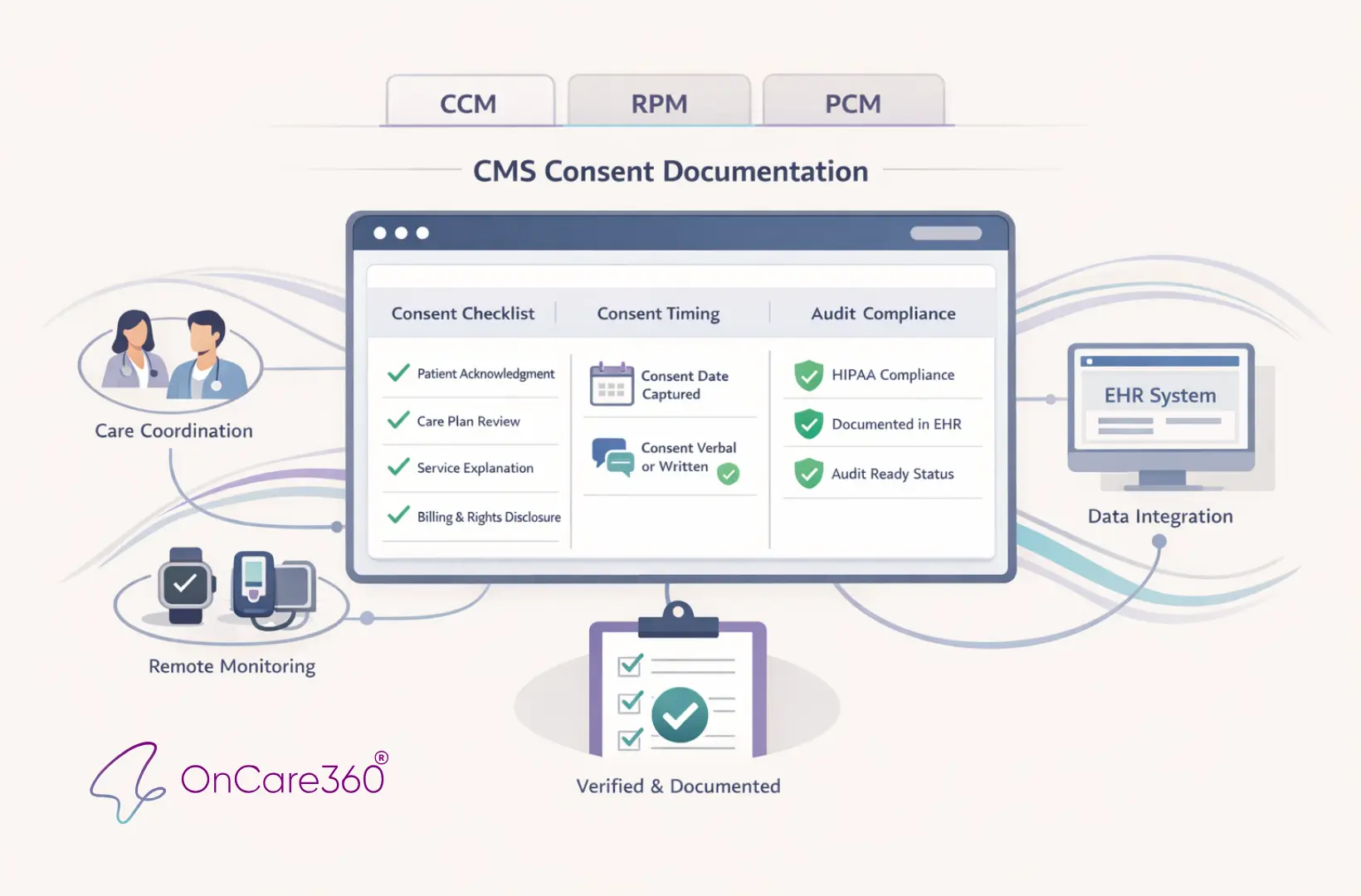
CMS Consent Documentation: What Must Be Captured
Jan 5, 2026
CMS Updates: How RPM is changing in 2026
Jan 3, 2026
How AI Expands Care Coordinator Capacity
Jan 1, 2026
RPM Time Tracking Errors That Lead to Denials
Dec 31, 2025
CMS Consent Documentation: What Must Be Captured
Dec 30, 2025
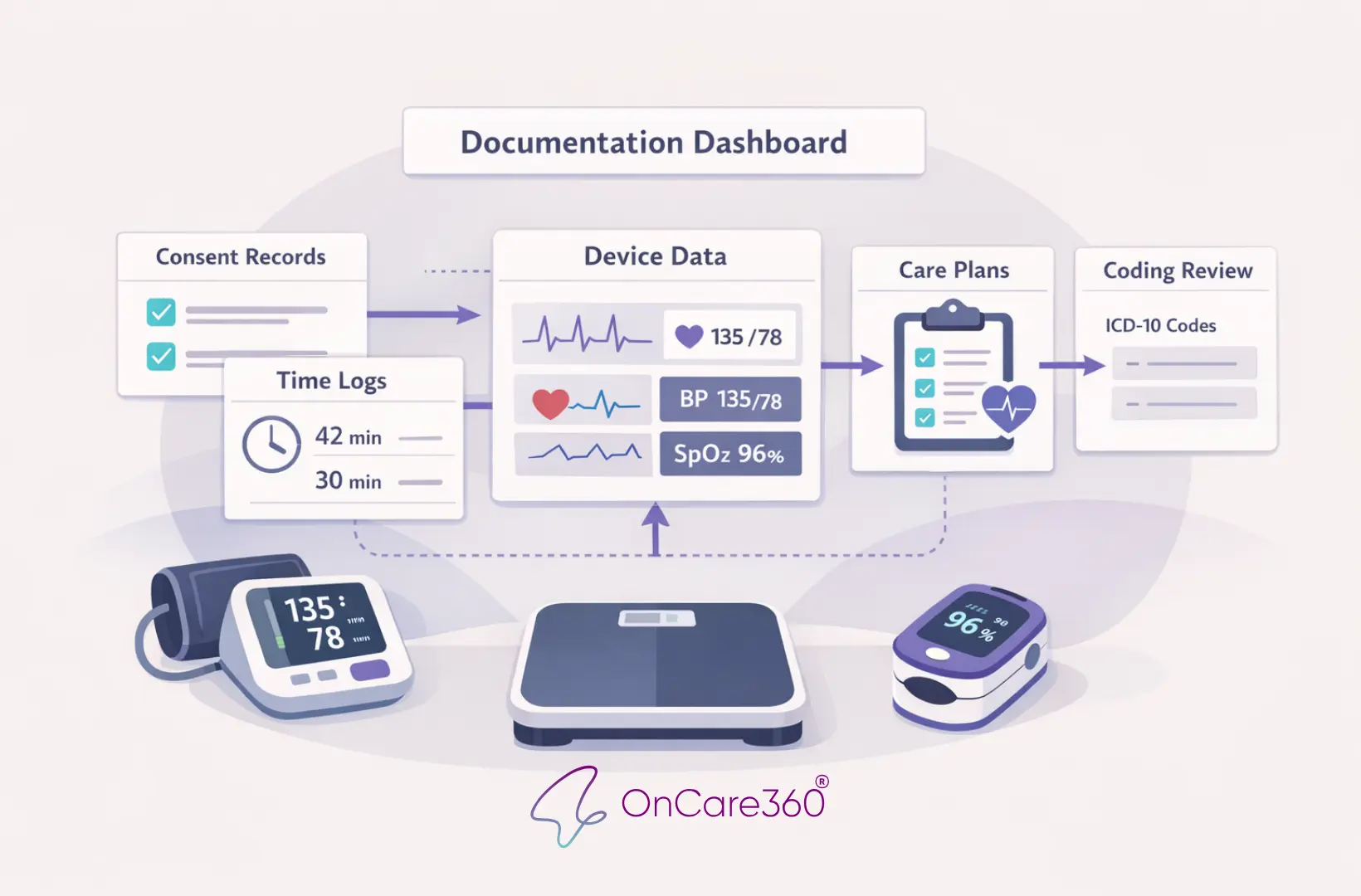
Top 10 Documentation Errors in CCM & RPM
Dec 29, 2025
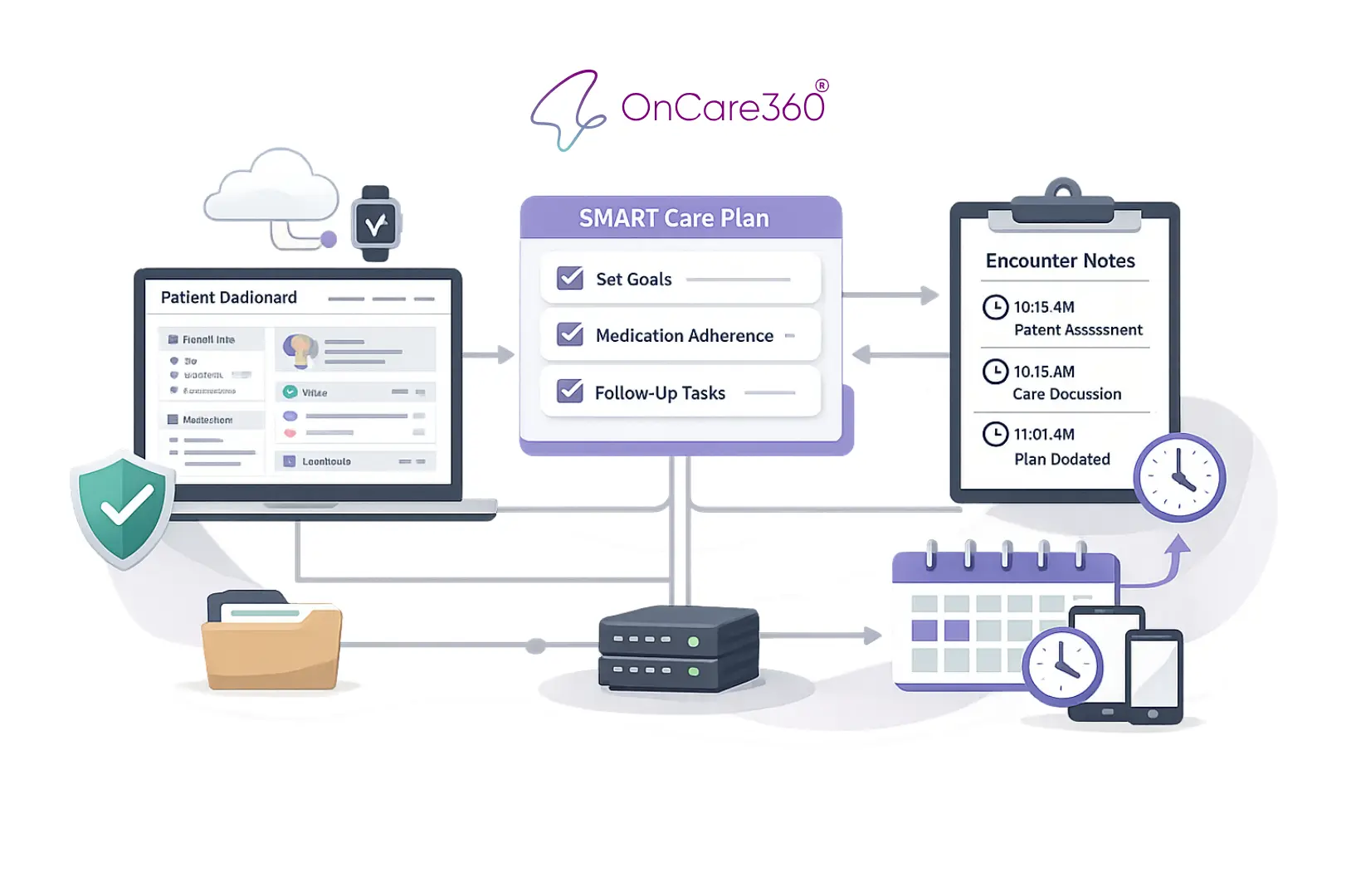
Audit-Ready Documentation: What CMS Expects
Jan 5, 2026
CMS Updates: How RPM is changing in 2026
Jan 3, 2026
How AI Expands Care Coordinator Capacity
Jan 1, 2026
RPM Time Tracking Errors That Lead to Denials
Dec 31, 2025
CMS Consent Documentation: What Must Be Captured
Dec 30, 2025
Top 10 Documentation Errors in CCM & RPM
Dec 29, 2025
Audit-Ready Documentation: What CMS Expects


Have questions?
Are you ready to explore the future of healthcare with OnCare360?
Contact us for more information or request a free consultation today.
Have questions?
Are you ready to explore the future of healthcare with OnCare360?
Contact us for more information or request a free consultation today.
Have questions?
Are you ready to explore the future of healthcare with OnCare360?
Contact us for more information or request a free consultation today.
Have questions?
Are you ready to explore the future of healthcare with OnCare360?
Contact us for more information or request a free consultation today.
Have questions?
Are you ready to explore the future of healthcare with OnCare360?
Contact us for more information or request a free consultation today.
Have questions?