What a High-Performing Care Coordination Workflow Looks Like
OnCare360
Nov 30, 2025
Care coordination workflows are structured systems that align care activities, data, and communication among healthcare teams and patients. They are essential for managing between-visit care programs like Chronic Care Management (CCM), Remote Patient Monitoring (RPM), and Transitional Care Management (TCM). Without these workflows, practices risk inefficiencies, missed follow-ups, and poor patient outcomes. High-performing workflows improve clinical results, reduce readmissions by up to 30%, and generate financial savings, with some programs reporting ROI as high as 607%. This article explores the key elements - clear roles, patient engagement, and standardized protocols - and the role of technology in optimizing care coordination.
3 Core Elements of Effective Care Coordination Workflows
Efficient care coordination workflows hinge on three key components: clearly defined roles and accountability, patient-centered engagement, and standardized protocols supported by connected systems. Together, these elements streamline care delivery and alleviate administrative challenges.
Clear Roles and Accountability
In any effective workflow, someone must take the lead. This role often falls to a primary care provider, case manager, or advanced practice RN, who acts as the central coordinator. They ensure that every referral, follow-up, and care plan update has a specific owner.
"Accountability for coordinating activities must be explicitly assigned, often to a primary care provider, case manager, or advanced practice RN."
Interdisciplinary care teams (ICTs) play a crucial role in addressing complex patient needs. These teams bring together a range of professionals - physicians, nurses, social workers, pharmacists, and community health workers - who collaborate to provide comprehensive care. Technology platforms further enhance accountability by assigning tasks, tracking their completion, and flagging urgent issues like missed vital checks or alerts for non-compliance.
Governance structures also contribute to accountability. Implementation steering committees and permanent oversight committees provide strategic guidance and help refine workflows over time. Once roles are clearly established, the focus shifts to engaging patients in their care.
Patient-Centered Engagement
For care coordination to succeed, patients and their caregivers need to take an active role. When patients are involved in decisions about their health, outcomes improve, satisfaction rises, and adherence to treatment plans strengthens. This requires capturing patient preferences, setting clear communication permissions, and tailoring care plans to their unique values and circumstances.
Building strong provider–patient relationships is essential. Programs like Chronic Care Management (CCM), Remote Patient Monitoring (RPM), and Transitional Care Management (TCM) thrive on personalized interactions. These might include outreach tailored to communication preferences, collaborative goal-setting during care planning, and regular check-ins to address challenges with adherence. Engaged patients are more likely to follow treatment plans and raise concerns promptly, which can prevent complications.
To complement patient engagement, standardized protocols and integrated systems are necessary to ensure consistency and efficiency.
Standardized Protocols and Connected Systems
Standardized protocols, such as policies, guidance documents, and flowcharts, are the backbone of reliable care coordination. These tools help minimize variability in how tasks are performed, making it easier to train staff, stay compliant, and identify areas for improvement.
Equally important are connected systems that facilitate seamless information sharing while safeguarding patient privacy. A centralized care coordination platform can unify multiple systems, including electronic health records (EHRs), lab results, and monitoring devices. By integrating patient data from various sources, these platforms reduce delays, minimize errors, and improve overall coordination.
Together, these three elements - clear roles, patient engagement, and standardized processes - form the foundation of effective care coordination workflows. Each piece works in harmony to create a system that prioritizes both efficiency and patient outcomes.
How to Build a High-Performing Workflow: Step-by-Step
Creating an effective care coordination workflow involves a structured process that starts with identifying at-risk patients and extends to continuous monitoring. This approach helps close care gaps and enhances overall outcomes.
Patient Identification and Risk Stratification
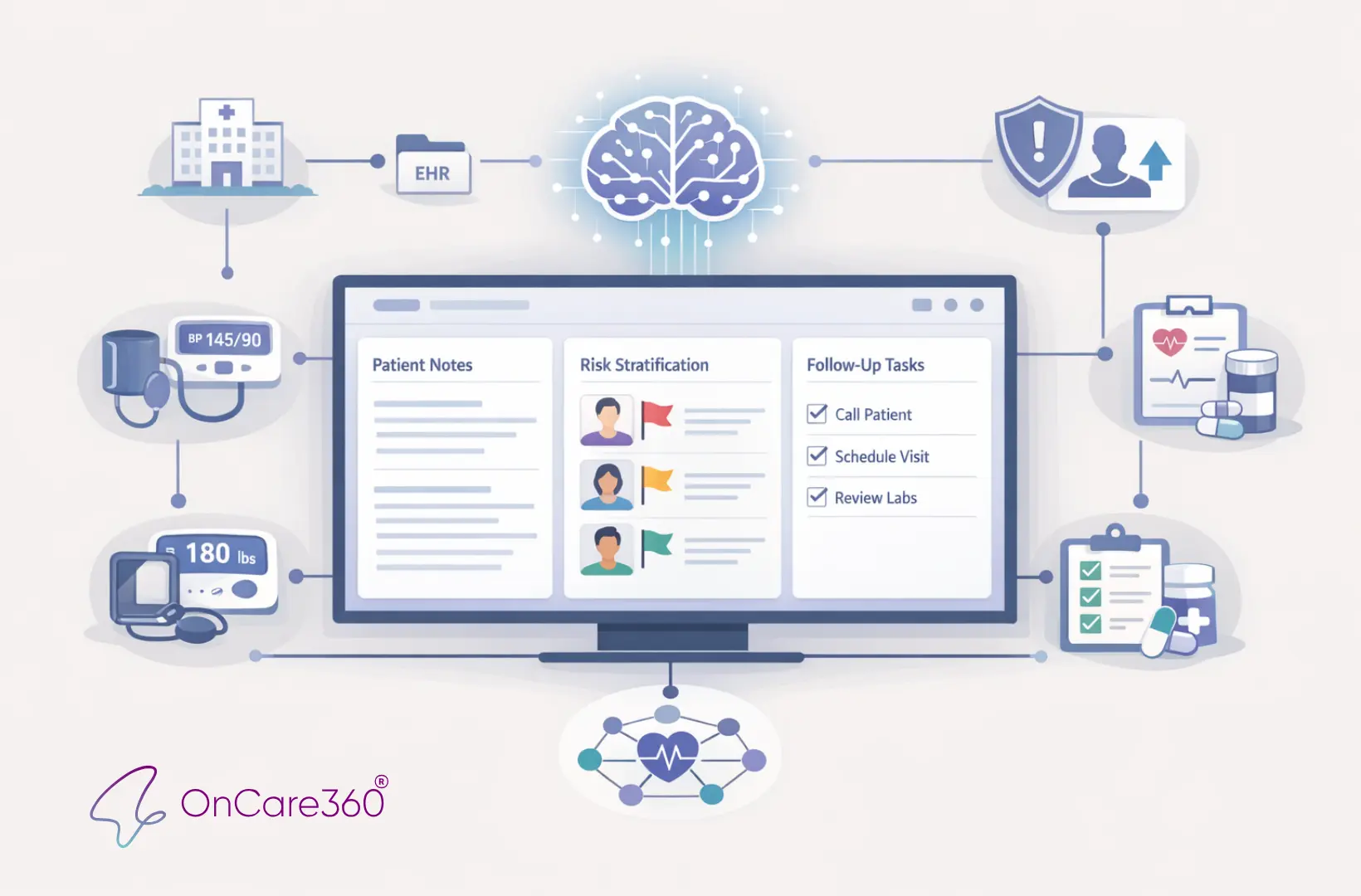
The foundation of any care coordination workflow begins with identifying patients who require additional support and assessing their risk levels. This process goes beyond merely responding to frequent emergency department visits or recent hospitalizations. By leveraging advanced AI tools and risk stratification models, healthcare providers can categorize patients based on the complexity of their care needs and potential risks.
Modern platforms integrate demographic, clinical, and social determinants of health (SDOH) data to create a comprehensive patient profile. For instance, a patient with diabetes who has poorly controlled HbA1c levels and recent emergency visits would be flagged for intensive coordination, with timely alerts ensuring proactive intervention. This method allows care teams to focus their efforts on patients who will benefit the most, optimizing time and resources.
Programs targeting high-risk Medicare beneficiaries have demonstrated impressive savings, with annual reductions per enrollee ranging from $493 to over $5,300. Some initiatives have reported returns on investment (ROI) as high as 607%. Chronic Care Management (CCM) programs, for example, are designed for Medicare patients managing two or more chronic conditions, while Advanced Primary Care Management (APCM) facilitates regular check-ins between primary care visits to address ongoing needs.
These efforts have tangible results: studies show reduced hospital readmissions and emergency department visits, with some interventions lowering admissions by 0.16 and emergency visits by 1.01 per patient over 180 days.
Once patients are stratified, the next step is to conduct a thorough assessment of their needs.
Conducting Patient Assessments
After identifying at-risk patients, the focus shifts to understanding their needs in detail. This involves looking beyond clinical data to consider behavioral, social, and environmental factors. Effective assessments capture patient and caregiver preferences, identify barriers like transportation issues or limited health literacy, and address specific cultural considerations.
"Success hinges on uncovering behavioral and social barriers." - blueBriX
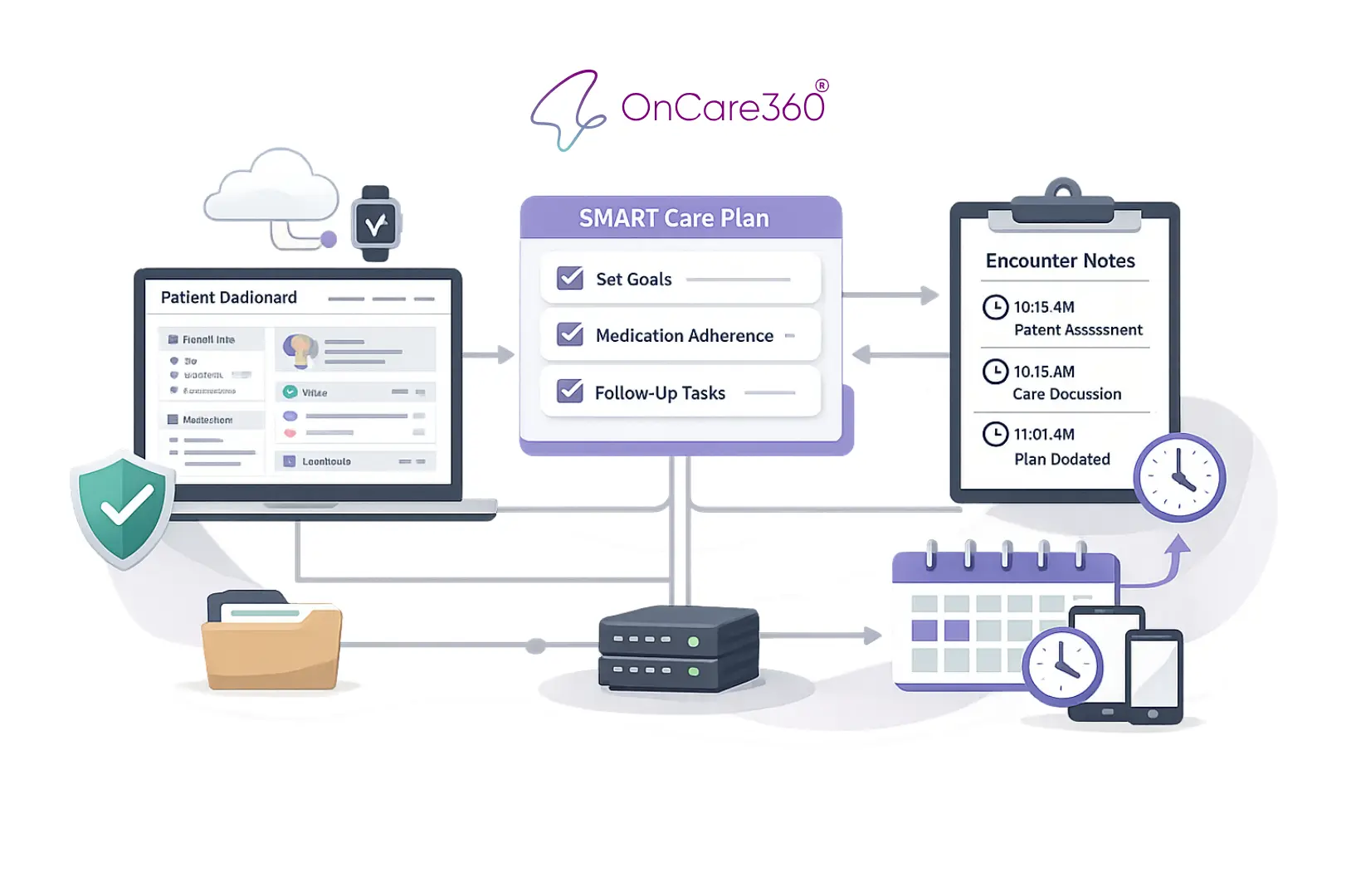
Modern care coordination platforms simplify this process by consolidating clinical, behavioral, and social assessments into a unified view. These systems highlight missing data points, guiding coordinators to build a complete picture of each patient. Findings from these assessments are automatically integrated into care plans, reducing administrative work and ensuring that actionable insights directly inform interventions.
A structured approach is widely adopted. A review of care coordination programs found that 89% of 19 initiatives used a systematic assessment process, and 63% developed individualized care plans. Successful models, such as the Camden Coalition of Healthcare Providers, Hennepin Health, and the Johns Hopkins Community Health Partnership, incorporate social services like housing, education, and employment assistance into their assessments. These programs also emphasize shared decision-making, using tools that document patient and family involvement in setting care goals.
Once care plans are in place, continuous monitoring ensures they remain effective and responsive.
Continuous Monitoring and Escalation
Care coordination doesn’t end with creating a plan - it requires ongoing oversight to detect and respond to potential issues before they escalate. By continuously monitoring patient conditions and adherence, care teams can make real-time adjustments to prevent complications.
Automated escalation protocols are a key component of this process. For example, if a high-risk cardiac patient's remote monitoring data shows abnormal blood pressure or heart rate readings, an alert is sent to the care team for immediate action. The frequency of check-ins is tailored to each patient’s risk level, with higher-risk individuals receiving more intensive support.
Programs like CCM and APCM include regular monthly outreach and ongoing follow-ups to maintain engagement between visits. A dedicated care coordinator acts as a consistent point of contact, assisting with scheduling, medication adherence, and referral follow-ups. In post-discharge care, automated systems ensure follow-up appointments occur within 48–72 hours, with alerts triggered if these critical milestones are missed. For example, the "Care Transitions Intervention" program in Rhode Island reduced readmissions from 0.93 to 0.65 over six months by prioritizing timely follow-ups.
Advanced analytics and AI further enhance monitoring by processing data from multiple sources to identify early warning signs of deterioration or care gaps. These platforms track adherence through pharmacy refills, patient-reported data, and remote monitoring, flagging deviations in real time. Additionally, a 24/7 care line provides patients with immediate access to support, allowing them to address concerns before they escalate.
How Technology Improves Workflow Efficiency
Modern platforms are reshaping healthcare workflows by integrating tools, automating repetitive tasks, and leveraging AI to support timely decision-making. OnCare360 exemplifies this shift, offering a unified system that streamlines between-visit care management. By reducing administrative load, it enhances clinical quality and ensures compliance. Below, we explore how these advancements address key challenges in care coordination.
Single Platform for Between-Visit Care
Traditional care coordination often involves juggling multiple disconnected systems - switching between EHRs, monitoring dashboards, billing software, and communication tools. This fragmented setup not only slows processes but also increases the likelihood of errors, leaving care teams spending more time managing technology than focusing on patients.
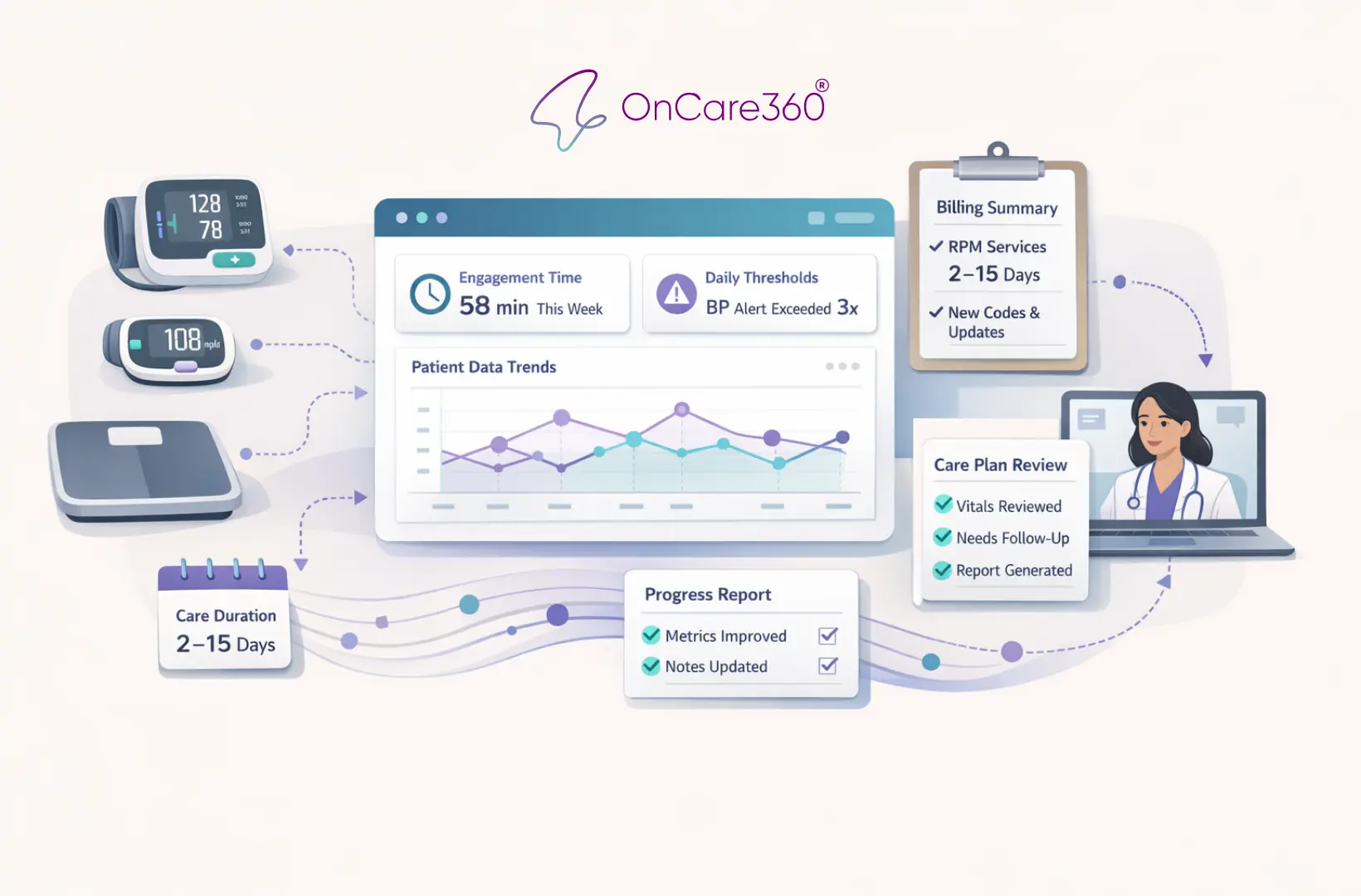
OnCare360 simplifies this by integrating CCM, RPM, and TCM workflows into a single platform. It provides real-time access to patient signals, care plans, documentation, and billing tools in one unified view. This centralized system continuously updates patient profiles, enabling faster decision-making and reducing the chances of missed interventions. By eliminating the need to toggle between systems, OnCare360 ensures that all team members - from care coordinators to physicians - work with the same accurate, up-to-date information. This streamlined approach also paves the way for AI-driven prioritization, enhancing care management efficiency.
AI-Powered Documentation and Prioritization
Administrative tasks like documentation, scheduling, and data entry consume a significant portion of care teams' time - time that could be better spent on patient care. OnCare360 addresses this issue with AI tools that automate routine tasks and provide actionable insights. Using natural language processing, the platform simplifies documentation, identifies care gaps, and predicts patient risks before they escalate.
Instead of manually reviewing every patient’s status, care coordinators receive prioritized worklists that highlight urgent cases and recommended next steps. This shift from reactive to proactive care allows teams to focus on patients who need immediate attention. The platform's human-in-the-loop model empowers small teams to efficiently manage large patient panels without compromising clinical quality or compliance. Additionally, these AI-driven tools enhance documentation accuracy, ensuring practices remain audit-ready.
Compliance and Audit-Ready Tools
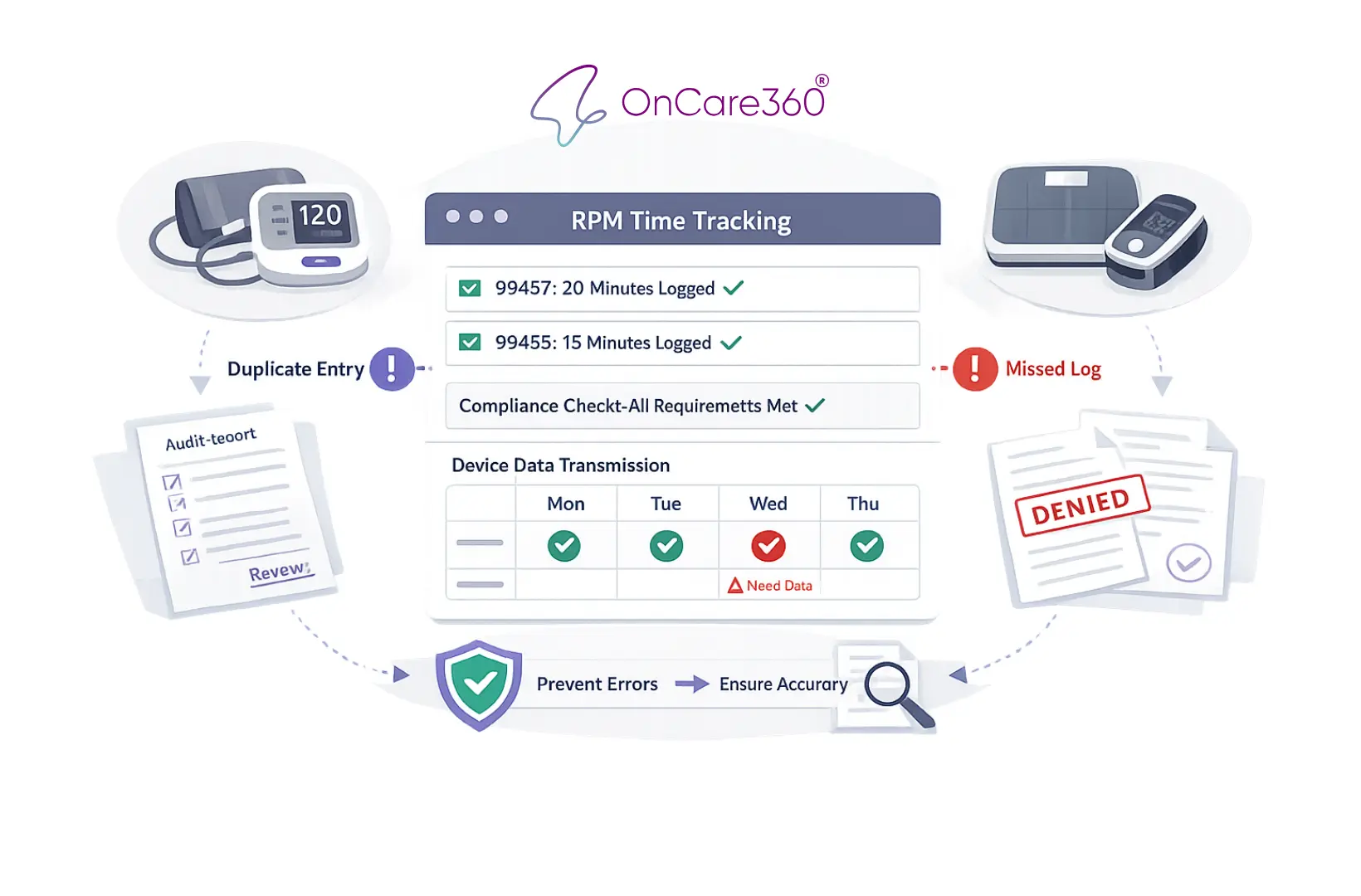
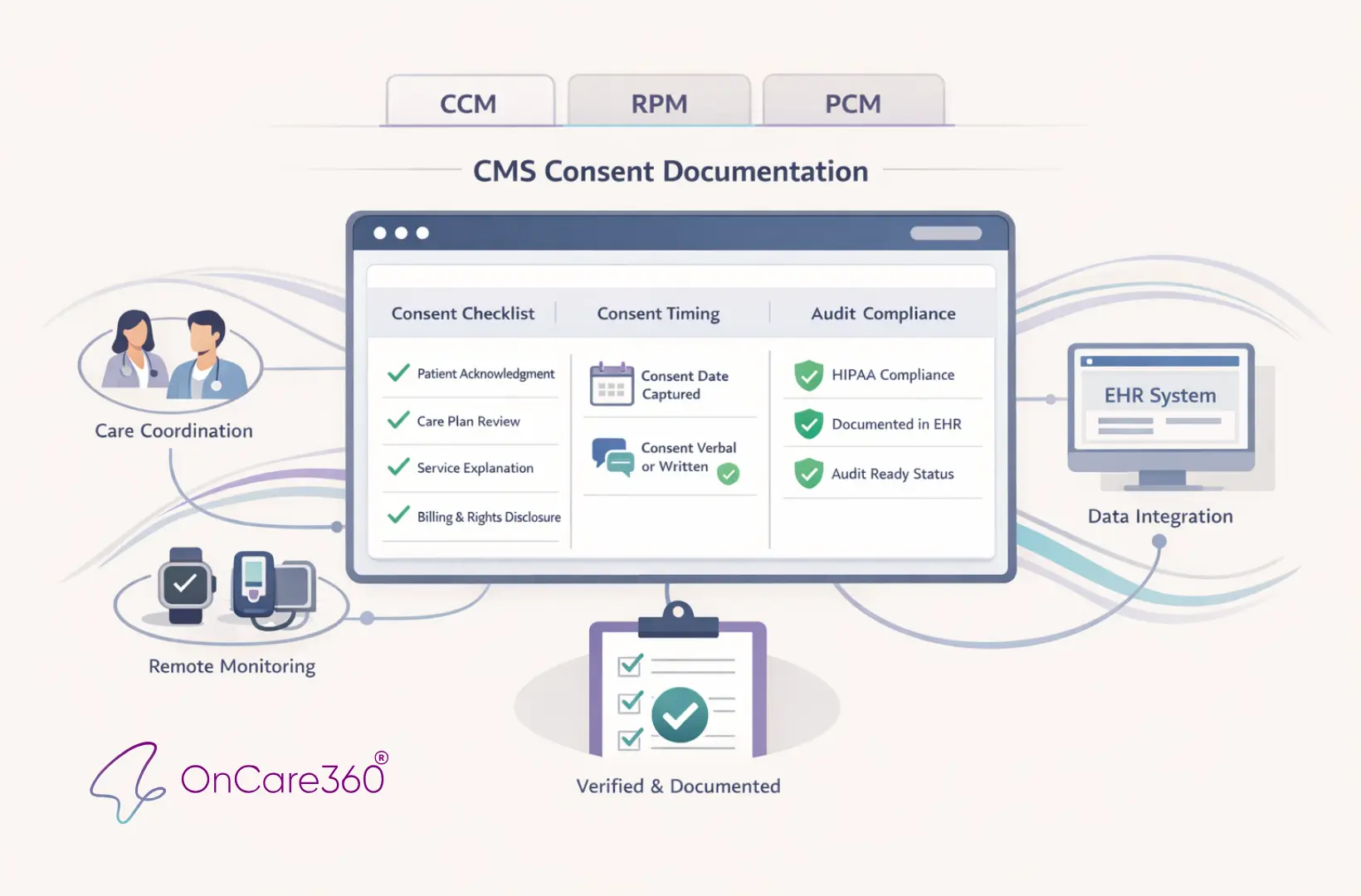
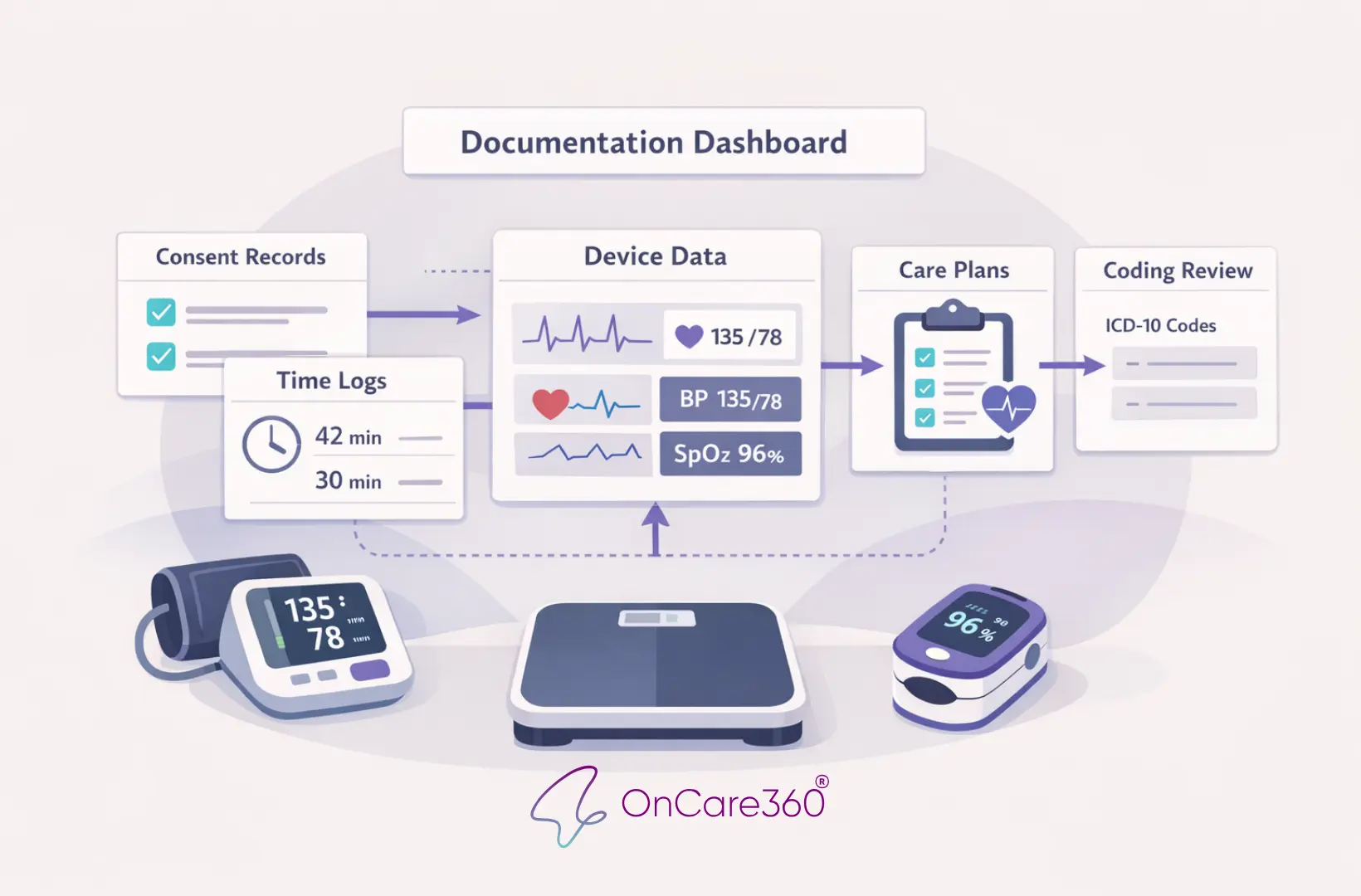
For practices participating in Medicare care management programs, maintaining regulatory compliance and billing accuracy is a constant challenge. OnCare360 simplifies these processes by embedding HIPAA-compliant standards and creating robust audit trails. The platform automatically tracks essential elements such as communication logs, time spent on care activities, consent workflows, and eligibility checks. These features are critical for meeting Medicare requirements and reducing the risk of claim denials.
Centralized documentation ensures that every interaction, care plan update, and clinical decision is accurately recorded and easily accessible for audits. This eliminates the last-minute scramble to gather records during reviews and provides the necessary data to meet value-based care reporting requirements. By embedding compliance into daily workflows, OnCare360 reduces administrative stress, supports ethical practices, and helps organizations confidently capture revenue while meeting regulatory standards.
Measuring Success: Benchmarks and ROI
Traditional vs OnCare360 Care Coordination Workflows Comparison
Effective care coordination workflows are the backbone of improved clinical, operational, and financial outcomes. By monitoring the right metrics, practices can pinpoint inefficiencies, showcase their value to payers, and justify ongoing investment in between-visit care initiatives. OnCare360 simplifies this process with automated KPI tracking and real-time reporting, enabling proactive care delivery while ensuring a measurable return on investment. These data-driven advancements lay the foundation for examining specific metrics and long-term results.
Key Performance Metrics
Tracking the right metrics is essential for successful care coordination. Metrics like time-to-intervention, adherence rates, and reductions in readmissions, emergency visits, or hospitalizations - often dropping by 15% to 33% - highlight the tangible benefits of coordinated care programs.
Scaling Operations and Long-Term Impact
Standardized workflows and a unified platform allow practices to expand care management capabilities, accommodating larger patient panels and achieving consistent savings without proportionately increasing staff. Research on coordinated care models for high-risk Medicare beneficiaries reveals annual savings per enrollee ranging from $493 to over $5,300, delivering a strong return on investment. Programs like the Pathways model have demonstrated net benefits of $89 to $422 per patient per month among high-risk, chronically ill populations.
OnCare360 supports this scalability by integrating CCM, RPM, and TCM workflows into one cohesive system. AI-driven tools, such as automated worklists and documentation features, empower small care teams to manage larger patient populations without compromising clinical quality. This positions practices to excel in value-based care arrangements, where outcomes and cost control are key to reimbursement. With continuous monitoring and structured care pathways, practices can establish predictable, repeatable processes that ensure long-term growth and financial stability.
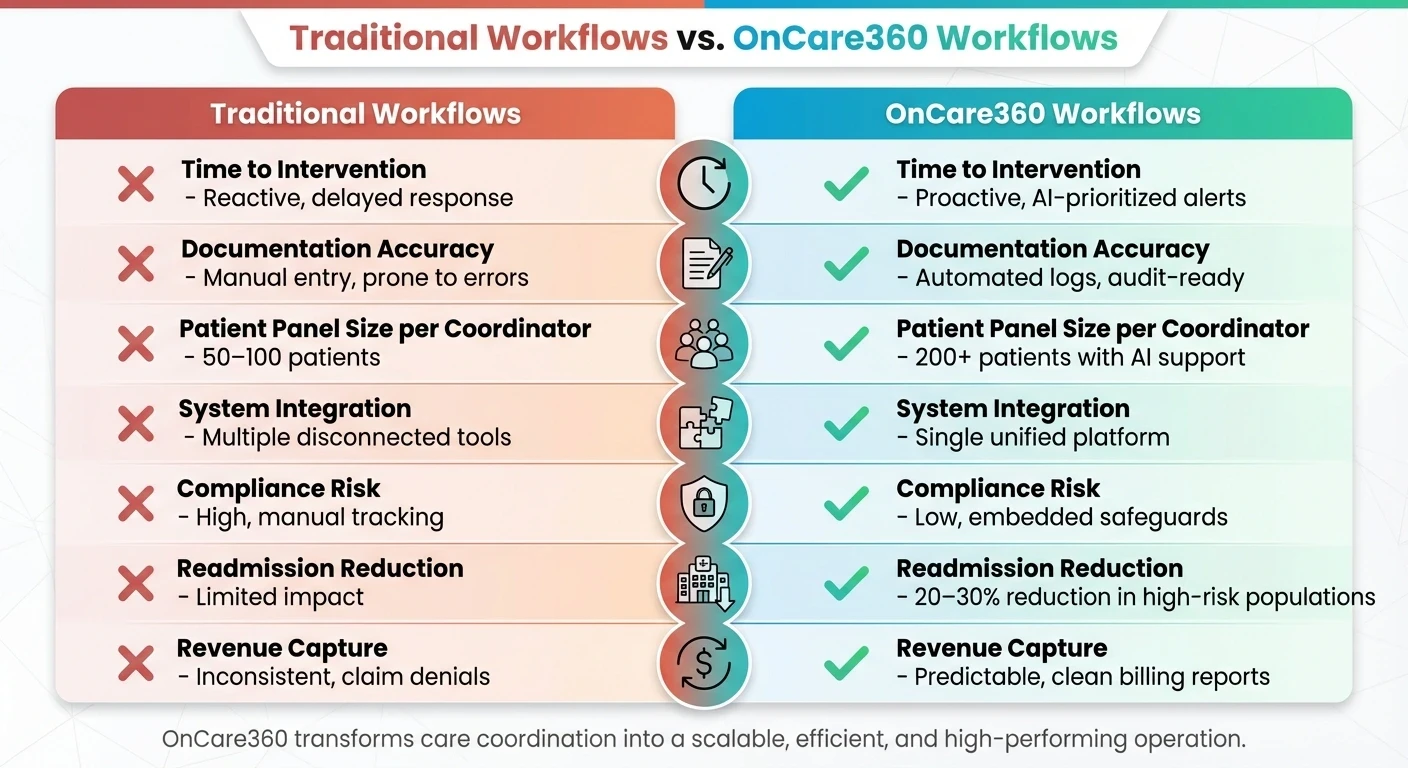
The difference between outdated, fragmented workflows and a streamlined, technology-driven system like OnCare360 is substantial. Traditional workflows often rely on multiple disconnected tools, manual documentation, and reactive responses to patient needs - leading to inefficiencies, errors, and capacity challenges. OnCare360 integrates compliance, automation, and decision support directly into daily operations. The table below illustrates how OnCare360 transforms care coordination:
Metric
Traditional Workflows
OnCare360 Workflows
Time to Intervention
Reactive, delayed response
Proactive, AI-prioritized alerts
Documentation Accuracy
Manual entry, prone to errors
Automated logs, audit-ready
Patient Panel Size per Coordinator
50–100 patients
200+ patients with AI support
System Integration
Multiple disconnected tools
Single unified platform
Compliance Risk
High, manual tracking
Low, embedded safeguards
Readmission Reduction
Limited impact
20–30% reduction in high-risk populations
Revenue Capture
Inconsistent, claim denials
Predictable, clean billing reports
This comparison underscores how OnCare360 transforms care coordination into a scalable, efficient, and high-performing operation. Practices gain measurable improvements in clinical outcomes, operational efficiency, and financial performance, setting the stage for sustainable success in between-visit care management.
Conclusion: Building Better Workflows with OnCare360
The Path to Consistent, Scalable Care
Successful workflows rely on clearly defined roles, standardized protocols, and well-integrated technology. Practices that embrace unified platforms often experience tangible benefits, such as reduced hospital readmissions and improved management of chronic conditions. These advancements empower care teams to handle larger patient panels more effectively. Transitioning from reactive, manual processes to proactive, AI-supported care delivery enhances both clinical outcomes and operational efficiency.
OnCare360 brings together key tools like remote monitoring, structured care pathways, automated documentation, and compliance-ready solutions into a single platform. By eliminating administrative bottlenecks, it allows care teams to focus on meaningful patient interactions. A practice manager from a Texas cardiology group highlighted the impact of continuous monitoring, noting it "ensures patients are cared for without complaints". This streamlined approach not only improves care quality but also boosts operational efficiency, laying the groundwork for scalable, sustainable improvements in your practice.
Next Steps: Partner with OnCare360
With enhanced outcomes and simplified processes, the logical next step is to partner with OnCare360. Achieving high-performing workflows doesn’t require a complete overhaul of your practice. OnCare360 integrates seamlessly with existing EHR systems and clinical operations, offering a centralized hub to support CCM, RPM, TCM, and other CMS care management programs.
Physician groups benefit from features like medical-grade cellular devices with no patient setup required, AI-driven prioritization of high-risk patients, and billing support that ensures accurate claims and reliable revenue capture. Whether you oversee a small primary care practice or a multi-specialty organization, OnCare360 aligns with your needs without adding significant costs or disruptions.
This approach delivers improved patient outcomes, reduces administrative burdens, and generates measurable financial returns. By adopting OnCare360, practices position themselves to excel in value-based care arrangements while providing consistent, clinician-guided support to high-risk chronic patients between visits.
FAQs
How can technology improve care coordination workflows?
Technology has become a cornerstone in improving care coordination workflows, primarily through the use of electronic health records (EHRs). These systems centralize patient information, ensuring healthcare providers can instantly access and share the most current data. This seamless exchange minimizes communication gaps and keeps every member of the care team aligned with the patient's needs.
Automation tools take this a step further by handling repetitive tasks, generating timely alerts, and enabling proactive care planning. These advancements not only reduce inefficiencies but also improve patient safety and contribute to better health outcomes. By incorporating the right technologies, healthcare teams can shift their focus from time-consuming administrative tasks to delivering high-quality patient care.
Why are standardized protocols important in care coordination?
Standardized protocols play a crucial role in promoting clarity, consistency, and accountability within care coordination. These protocols minimize errors, improve communication among healthcare teams, and simplify workflows, ultimately supporting better patient outcomes.
Clear guidelines for team roles, communication, and processes are especially valuable in managing complex care programs like Chronic Care Management (CCM), Remote Patient Monitoring (RPM), and Transitional Care Management (TCM). By providing a structured framework, these protocols not only improve operational efficiency but also ensure patients receive well-coordinated, high-quality care tailored to their individual needs.
How does engaging patients lead to better care outcomes?
Engaging patients in their care significantly improves health outcomes by encouraging active involvement in decision-making, promoting self-management, and ensuring consistent health monitoring. These strategies contribute to better medication adherence, fewer complications, and greater patient satisfaction.
When patients take an active role in their care, they gain the confidence to make informed decisions and work collaboratively with their healthcare team. This approach builds trust, supports healthier habits, and fosters long-term well-being.
Traditional vs OnCare360 Care Coordination Workflows Comparison
Effective care coordination workflows are the backbone of improved clinical, operational, and financial outcomes. By monitoring the right metrics, practices can pinpoint inefficiencies, showcase their value to payers, and justify ongoing investment in between-visit care initiatives. OnCare360 simplifies this process with automated KPI tracking and real-time reporting, enabling proactive care delivery while ensuring a measurable return on investment. These data-driven advancements lay the foundation for examining specific metrics and long-term results.
Key Performance Metrics
Tracking the right metrics is essential for successful care coordination. Metrics like time-to-intervention, adherence rates, and reductions in readmissions, emergency visits, or hospitalizations - often dropping by 15% to 33% - highlight the tangible benefits of coordinated care programs.
Scaling Operations and Long-Term Impact
Standardized workflows and a unified platform allow practices to expand care management capabilities, accommodating larger patient panels and achieving consistent savings without proportionately increasing staff. Research on coordinated care models for high-risk Medicare beneficiaries reveals annual savings per enrollee ranging from $493 to over $5,300, delivering a strong return on investment. Programs like the Pathways model have demonstrated net benefits of $89 to $422 per patient per month among high-risk, chronically ill populations.
OnCare360 supports this scalability by integrating CCM, RPM, and TCM workflows into one cohesive system. AI-driven tools, such as automated worklists and documentation features, empower small care teams to manage larger patient populations without compromising clinical quality. This positions practices to excel in value-based care arrangements, where outcomes and cost control are key to reimbursement. With continuous monitoring and structured care pathways, practices can establish predictable, repeatable processes that ensure long-term growth and financial stability.
The difference between outdated, fragmented workflows and a streamlined, technology-driven system like OnCare360 is substantial. Traditional workflows often rely on multiple disconnected tools, manual documentation, and reactive responses to patient needs - leading to inefficiencies, errors, and capacity challenges. OnCare360 integrates compliance, automation, and decision support directly into daily operations. The table below illustrates how OnCare360 transforms care coordination:
Metric
Traditional Workflows
OnCare360 Workflows
Time to Intervention
Reactive, delayed response
Proactive, AI-prioritized alerts
Documentation Accuracy
Manual entry, prone to errors
Automated logs, audit-ready
Patient Panel Size per Coordinator
50–100 patients
200+ patients with AI support
System Integration
Multiple disconnected tools
Single unified platform
Compliance Risk
High, manual tracking
Low, embedded safeguards
Readmission Reduction
Limited impact
20–30% reduction in high-risk populations
Revenue Capture
Inconsistent, claim denials
Predictable, clean billing reports
This comparison underscores how OnCare360 transforms care coordination into a scalable, efficient, and high-performing operation. Practices gain measurable improvements in clinical outcomes, operational efficiency, and financial performance, setting the stage for sustainable success in between-visit care management.
Conclusion: Building Better Workflows with OnCare360
The Path to Consistent, Scalable Care
Successful workflows rely on clearly defined roles, standardized protocols, and well-integrated technology. Practices that embrace unified platforms often experience tangible benefits, such as reduced hospital readmissions and improved management of chronic conditions. These advancements empower care teams to handle larger patient panels more effectively. Transitioning from reactive, manual processes to proactive, AI-supported care delivery enhances both clinical outcomes and operational efficiency.
OnCare360 brings together key tools like remote monitoring, structured care pathways, automated documentation, and compliance-ready solutions into a single platform. By eliminating administrative bottlenecks, it allows care teams to focus on meaningful patient interactions. A practice manager from a Texas cardiology group highlighted the impact of continuous monitoring, noting it "ensures patients are cared for without complaints". This streamlined approach not only improves care quality but also boosts operational efficiency, laying the groundwork for scalable, sustainable improvements in your practice.
Next Steps: Partner with OnCare360
With enhanced outcomes and simplified processes, the logical next step is to partner with OnCare360. Achieving high-performing workflows doesn’t require a complete overhaul of your practice. OnCare360 integrates seamlessly with existing EHR systems and clinical operations, offering a centralized hub to support CCM, RPM, TCM, and other CMS care management programs.
Physician groups benefit from features like medical-grade cellular devices with no patient setup required, AI-driven prioritization of high-risk patients, and billing support that ensures accurate claims and reliable revenue capture. Whether you oversee a small primary care practice or a multi-specialty organization, OnCare360 aligns with your needs without adding significant costs or disruptions.
This approach delivers improved patient outcomes, reduces administrative burdens, and generates measurable financial returns. By adopting OnCare360, practices position themselves to excel in value-based care arrangements while providing consistent, clinician-guided support to high-risk chronic patients between visits.
FAQs
How can technology improve care coordination workflows?
Technology has become a cornerstone in improving care coordination workflows, primarily through the use of electronic health records (EHRs). These systems centralize patient information, ensuring healthcare providers can instantly access and share the most current data. This seamless exchange minimizes communication gaps and keeps every member of the care team aligned with the patient's needs.
Automation tools take this a step further by handling repetitive tasks, generating timely alerts, and enabling proactive care planning. These advancements not only reduce inefficiencies but also improve patient safety and contribute to better health outcomes. By incorporating the right technologies, healthcare teams can shift their focus from time-consuming administrative tasks to delivering high-quality patient care.
Why are standardized protocols important in care coordination?
Standardized protocols play a crucial role in promoting clarity, consistency, and accountability within care coordination. These protocols minimize errors, improve communication among healthcare teams, and simplify workflows, ultimately supporting better patient outcomes.
Clear guidelines for team roles, communication, and processes are especially valuable in managing complex care programs like Chronic Care Management (CCM), Remote Patient Monitoring (RPM), and Transitional Care Management (TCM). By providing a structured framework, these protocols not only improve operational efficiency but also ensure patients receive well-coordinated, high-quality care tailored to their individual needs.
How does engaging patients lead to better care outcomes?
Engaging patients in their care significantly improves health outcomes by encouraging active involvement in decision-making, promoting self-management, and ensuring consistent health monitoring. These strategies contribute to better medication adherence, fewer complications, and greater patient satisfaction.
When patients take an active role in their care, they gain the confidence to make informed decisions and work collaboratively with their healthcare team. This approach builds trust, supports healthier habits, and fosters long-term well-being.