7 Signs Your Practice Needs a Between-Visit Care Model
OnCare360
Nov 23, 2025
A between-visit care model ensures continuous patient engagement and monitoring beyond traditional in-office appointments. This approach addresses gaps in chronic disease management, reduces hospital readmissions, and improves operational efficiency. Practices struggling with disengaged patients, high readmission rates, or unbilled services can benefit clinically, operationally, and financially by transitioning to this model. Key takeaways include strategies for care coordination, leveraging tools like Chronic Care Management (CCM) and Remote Patient Monitoring (RPM), and enhancing compliance through structured workflows.
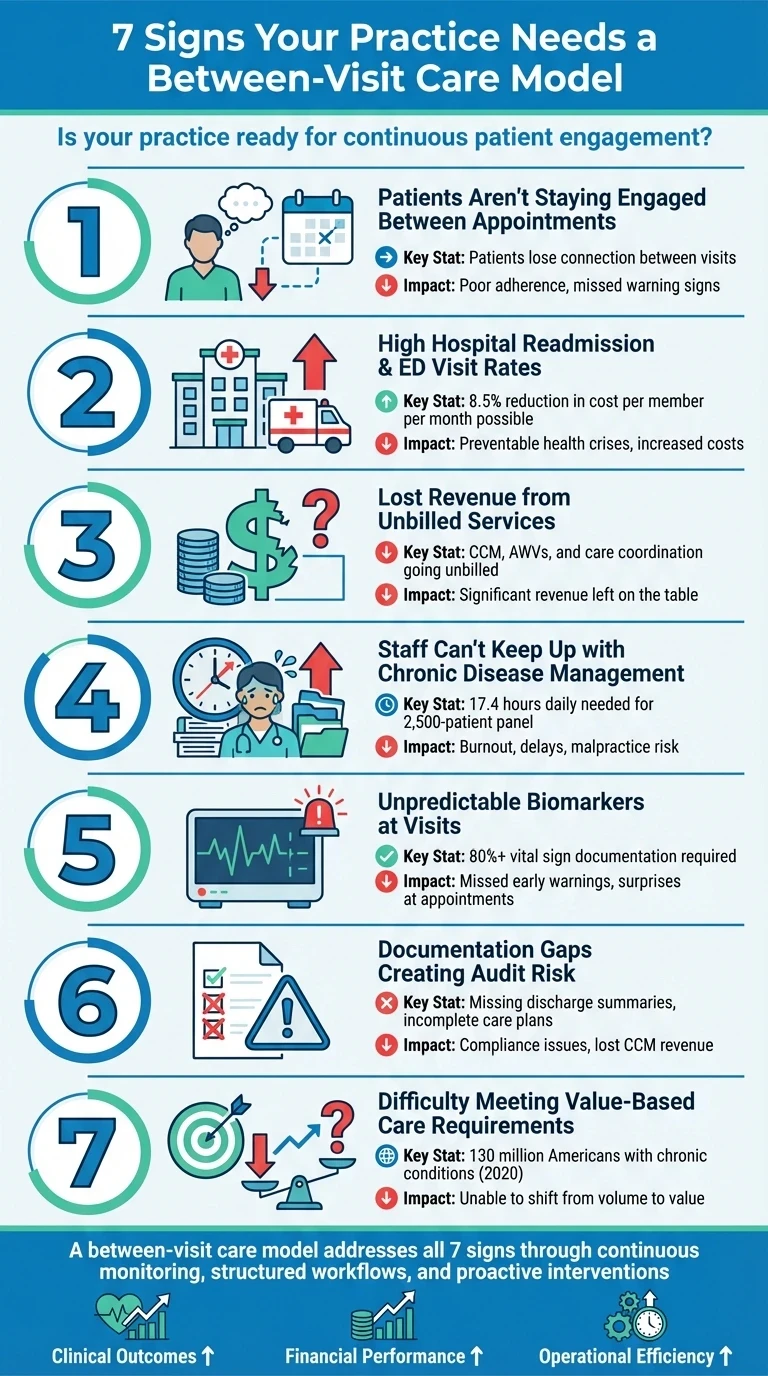
7 Signs Your Practice Needs Between-Visit Care Model
1. Patients Aren't Staying Engaged Between Appointments
Patients managing chronic conditions often lose connection with their care teams between visits, largely due to obstacles like long travel distances or demanding work schedules. Without consistent monitoring or regular check-ins, many patients drift away from their care plans, leading to poorer health outcomes. This gap in engagement not only affects individual well-being but also undermines overall clinical success.
Improving Clinical Outcomes
When patients disengage, their ability to manage their conditions at home diminishes. They may struggle with tasks like taking medications as prescribed, making necessary lifestyle adjustments, or recognizing early warning signs. A structured between-visit care approach can bridge this gap by creating reliable follow-up processes that keep patients on track. Through timely digital communication, patients are more likely to adhere to treatment plans and report issues before they escalate into emergencies. These proactive measures can significantly enhance both patient care and health outcomes.
Enhancing Operational Efficiency
Maintaining consistent engagement isn't just a patient challenge - it can strain clinical operations as well. Traditional episodic care models often fail to provide the personalized, timely touch points that patients need, leaving them feeling disconnected. By adopting team-based care models that extend beyond in-office visits, practices can improve patient engagement without overburdening physicians. Care coordinators and health coaches can establish regular contact with patients, turning reactive outreach into a structured, manageable workflow. Additionally, tools like patient portals integrated with medical records allow patients to flag concerns ahead of appointments, making clinic visits more efficient and focused.
Scaling for High-Risk Patient Panels
As patient panels grow, manual outreach becomes increasingly impractical, particularly for high-risk groups. Scalable solutions are essential to manage this demand effectively. Platforms like OnCare360 combine continuous remote monitoring with structured care pathways, enabling small teams to oversee larger patient panels efficiently. AI-driven prioritization tools identify which patients need urgent attention, while certified care coordinators handle the day-to-day management of chronic conditions. This approach allows practices to scale their efforts seamlessly, ensuring consistent care for all patients while maintaining operational efficiency.
2. High Hospital Readmission and Emergency Department Visit Rates
Frequent hospital readmissions and emergency department visits among patients with chronic conditions signal a breakdown in care continuity. These interruptions often result in preventable health crises and increased costs. A between-visit care model bridges this gap by offering continuous monitoring and proactive interventions, aiming to address issues early before they escalate into emergencies. This approach supports better health outcomes while improving cost efficiency.
Improving Clinical Outcomes
Between-visit care plays a critical role in ensuring stability after hospital discharge. Care coordinators perform regular check-ins to monitor patients' progress, resolve challenges such as medication confusion or transportation barriers, and connect patients to mental health resources when needed. Additionally, timely access to appointments, specialists, and ambulatory care - complemented by a 24/7 nurse call line - helps manage emerging health concerns before they require emergency intervention. These strategies collectively reduce unnecessary emergency department visits and promote smoother recovery.
Enhancing Financial Performance
Reducing avoidable emergency visits and hospital readmissions translates into substantial cost savings. For example, Presidium Health's transitional care program achieved an 8.5% reduction in total cost per member per month through proactive care coordination. In value-based care models, preventing costly acute care events not only generates shared savings but also enhances Hierarchical Condition Category (HCC) capture for accurate reimbursement. While Medicare's 30-day readmission penalties have driven improvements, the rise in overall acute revisits highlights the need for upstream interventions. By addressing early warning signs like medication access, caregiver readiness, and social determinants of health, care teams can act before conditions deteriorate.
Scaling for High-Risk Patient Panels
The clinical and financial advantages of between-visit care underscore the importance of scalable care coordination for high-risk populations. Managing these patients effectively involves stratifying panels by medical and psychosocial complexity and assigning team roles accordingly. Complex care management, often led by nurses or social workers, focuses on patients who frequently require costly services, alleviating the burden on physicians.
OnCare360 enhances scalability by integrating continuous remote monitoring with AI-driven prioritization to identify high-risk patients swiftly. Certified care coordinators then follow structured care pathways to ensure consistent follow-up across extensive patient panels. Furthermore, medical-grade cellular devices provide real-time vital sign monitoring without the need for Wi-Fi or smartphones, making the technology accessible to patients who are less tech-savvy. This infrastructure enables small care teams to manage thousands of patients effectively while maintaining the clinical quality necessary to reduce preventable hospitalizations.
3. Lost Revenue from Services You're Not Billing
Many practices engage in care coordination, chronic disease management, and preventive services through phone calls, emails, and follow-ups - but these efforts often go unbilled. This oversight creates a financial gap that can threaten the long-term sustainability of a practice. A structured between-visit care model addresses this issue by ensuring that services like Chronic Care Management (CCM), Annual Wellness Visits (AWVs), and medication adherence support are systematically documented and billed. By formalizing these processes, practices can bridge the gap between informal patient interactions and proper reimbursement.
Improving Financial Performance
Programs like CCM and AWVs provide recurring Medicare revenue when properly documented and billed. Without these mechanisms, practices risk leaving significant revenue untapped. As healthcare continues to shift toward value-based care models, these services become even more critical. Value-based care rewards practices for delivering high-quality care and provides a more predictable income stream.
By implementing a between-visit care model, practices ensure that all eligible services - such as care coordination calls and health risk assessments - are accurately documented and billed. This approach transforms routine patient outreach into reimbursable activities, aligning financial goals with patient-centered care.
"CCM is a powerful tool to further involve patients in the decision-making process and their overall care journey. The result is improved patient satisfaction, better clinical outcomes, and recurring revenue for your practice".
This structured method not only increases revenue but also integrates seamlessly into daily operations, creating a more efficient workflow.
Enhancing Operational Efficiency
A well-defined between-visit care model leverages pre-visit planning and follow-up communications to identify care gaps, such as overdue screenings or unaddressed diabetes management needs. By tracking these activities systematically, practices can delegate reimbursable tasks - like medication reconciliation or chronic condition follow-ups - to non-clinician staff under standing orders. This allows physicians to focus on complex cases while still capturing revenue for the team's efforts.
OnCare360 simplifies this process by integrating automated time tracking, communication logs, and care plan documentation into audit-ready reports. Its AI-driven prioritization helps care coordinators quickly identify patients requiring specific interventions, such as medication adjustments or care gap closures. This ensures billable services are consistently delivered across the patient population, all while minimizing administrative strain on the practice.
4. Staff Can't Keep Up with Chronic Disease Management
Overburdened care teams often face delays in processing labs, adjusting medications, and closing care gaps. Research highlights the challenge: clinicians handling a 2,500-patient panel without team support would need to work an untenable 17.4 hours daily to meet care demands. This excessive workload contributes to burnout, misdiagnosis, inappropriate prescribing, and heightened malpractice risks.
Operational Efficiency
A between-visit care model offers a practical way to tackle these challenges by redistributing chronic disease management tasks across the care team. Instead of physicians managing every patient interaction, nurses, medical assistants, pharmacists, and care coordinators take on specific responsibilities through standing orders and standardized protocols. Pre-visit planning, conducted 2-3 days before appointments, identifies care gaps and ensures necessary labs are ordered, allowing visits to focus on critical issues.
Assigning 2-3 clinical assistants per clinician can significantly enhance operational capacity. These team members actively monitor registries for gaps in routine chronic care services, addressing them without requiring physician input. Daily huddles ensure alignment on patient priorities, while expanded rooming and discharge protocols allow staff to handle tasks that previously consumed physician time.
Scalability for High-Risk Patient Panels
Team-based care models also make it possible to manage larger patient populations while preventing clinician burnout. Some practices assign subpanels of patients with stable chronic conditions to nurses or pharmacists, who follow standing orders to manage these cases. This setup allows physicians to dedicate their time to complex cases while ensuring protocol-driven care for less complicated patients.
OnCare360's AI-powered tools further streamline care by flagging patients requiring immediate attention, such as those needing medication adjustments, follow-ups on vital sign changes, or overdue screenings. Automated time tracking and communication logs document between-visit activities, enabling small teams to manage extensive patient panels effectively.
5. Unpredictable Biomarkers and Unexpected Changes at Visits
When patients arrive for appointments with sudden spikes in blood pressure, uncontrolled glucose levels, or unexplained weight shifts, it often highlights gaps in care coordination and missed early warning signs. For instance, under the Meaningful Use Stage 2 program, providers were required to document vital signs - such as height, weight, blood pressure, and BMI - for over 80% of unique patients. Despite these guidelines, many practices still lack structured systems for monitoring patients between visits, leaving critical health changes unnoticed. This gap emphasizes the importance of implementing continuous monitoring solutions.
Clinical Outcomes Improvement
Real-time data collection offers a clearer picture of a patient’s health trajectory, enabling timely interventions. Tracking vital signs and other health metrics consistently helps reduce misdiagnoses, especially in cases where symptoms overlap across multiple conditions. Between-visit care models are designed to monitor biomarkers like lab results, vital signs, and cognitive function, ensuring that any concerning trends are identified and addressed well before the next scheduled appointment [4][5][9][8][6][2].
This proactive monitoring can uncover early signs of acute medical issues or worsening chronic conditions, minimizing the chances of surprises during in-person visits. In home health settings, consistent monitoring of vital signs not only provides a safety net for vulnerable patients but also helps determine the urgency of notifying a physician.
Operational Efficiency
Efficient pre-visit planning - such as reviewing patient notes and ordering necessary labs - can significantly reduce unexpected developments during appointments. Bridging clinical insights with streamlined operations is essential. For example, OnCare360’s cellular medical-grade devices enable continuous, independent monitoring for high-risk patients. Meanwhile, AI-powered tools analyze data to flag patients who need immediate attention, whether due to vital sign abnormalities or overdue screenings. Additionally, automated logs ensure audit-ready documentation for billing and compliance, allowing smaller care teams to effectively manage larger patient populations.
6. Documentation Gaps That Create Audit Risk
Beyond challenges in patient engagement and revenue capture, documentation gaps pose a serious risk to your practice. When critical information is incomplete or inaccurate - such as incorrect vital signs, missing external notes like hospital discharge summaries, or underdeveloped care plans - compliance issues are likely to surface during audits. Programs like Meaningful Use emphasize the importance of precise documentation for key vitals, including height, weight, blood pressure, and BMI. Yet, many practices still struggle to implement systems that ensure consistent accuracy in these areas. Similarly, failing to document overdue screenings, such as mammograms, colorectal cancer tests, or HbA1c lab work, not only signals missed opportunities for proactive care but also exposes the practice to potential audit scrutiny.
Financial Impact of Documentation
Incomplete or inaccurate documentation can undermine your ability to capture revenue from Chronic Care Management (CCM) and care coordination services. Medicare reimburses for CCM services provided to patients with two or more chronic conditions, covering activities like care plan development, medication management, and coordination of care. However, accurate billing for these services requires thorough tracking and documentation. Without proper systems in place, practices risk losing revenue. The American Academy of Family Physicians (AAFP) emphasizes this point:
"CCM is a time-based service with its own documentation and billing requirements, so establish a process to track your time related to CCM; even a simple spreadsheet will do. Accurate billing will ensure that your practice can sustain this important work".
Improving Operational Efficiency
Between-visit care models offer practical solutions to bridge documentation gaps. These models distribute responsibilities across care teams and rely on pre-visit planning checklists to ensure all necessary patient information is collected before appointments. Structured care coordination processes also help minimize discrepancies in patient records. Platforms like OnCare360 automate critical tasks such as communication logging, time tracking, and care plan documentation, ensuring compliance and audit readiness. AI-powered tools further enhance accuracy by identifying gaps, such as overdue labs or incomplete vital sign entries, while licensed clinicians review and finalize documentation. This structured approach allows even small teams to manage larger patient panels effectively, maintaining high documentation standards without increasing audit risk. By addressing documentation gaps, practices not only reduce their audit exposure but also position themselves to achieve broader quality and value-based care goals.
7. Difficulty Meeting Value-Based Care Requirements
Value-based care shifts the focus from volume to quality, rewarding practices for achieving positive clinical outcomes through better care coordination, effective communication, improved access, and cost management. However, implementing these principles can be challenging, particularly when balancing organizational quality metrics with the unique needs of individual patients. This challenge often becomes more pronounced when managing high-risk patient panels with multiple chronic conditions. Traditional, reactive approaches targeting acute issues often fail to meet the continuous engagement required under value-based care contracts.
Clinical Outcomes Improvement
Adopting a proactive approach to care can significantly enhance patient outcomes. A between-visit care model replaces episodic, reactive care with ongoing management of preventive measures and chronic conditions. This strategy aligns with the Triple Aim: improving health outcomes, enhancing the patient experience, and reducing costs. By 2020, approximately 130 million Americans were living with one or more chronic conditions. These patients often require complex care plans and consistent monitoring, making proactive care essential for meeting value-based care expectations.
Managing High-Risk Patient Panels
The complexity of patient panels increases as individuals age and develop multiple comorbidities. Managing these high-risk groups effectively requires more than just adding staff - it calls for structured workflows and clear prioritization. OnCare360's AI-driven platform helps identify risk factors and documentation needs, while licensed clinicians provide expert oversight. This combination of automation and clinical expertise enables small teams to manage larger patient populations without compromising care quality. Additionally, the platform ensures audit-ready documentation, supporting compliance and maintaining the high standards that value-based care models demand.
Strengthening Financial Performance
Value-based care also presents an opportunity to improve financial outcomes. As reimbursement models transition from fee-for-service to models that reward coordination and performance, practices can benefit from services like CCM, RPM, and TCM. A between-visit care model not only enhances care quality but also allows practices to generate revenue through these services. Comprehensive tracking and ready-to-file billing reports provide the data needed to demonstrate return on investment (ROI) to payors, while supporting shared savings and bonus payments. This data-driven approach ensures practices can justify ongoing investments in value-based care initiatives.
Conclusion
Recurring issues like disengaged patients, financial inefficiencies, staff burnout, unexpected clinical changes, documentation gaps, and struggles with value-based care indicate that your current care model may not be meeting the demands of modern healthcare. Episodic care alone can't provide the ongoing attention that high-risk patients require, and relying on manual processes only exacerbates staff fatigue, revenue loss, and compliance risks.
A between-visit care model shifts the focus from reactive, appointment-based care to proactive, continuous management. This approach establishes structured workflows for patient engagement, allows for early intervention to prevent health issues from escalating, and generates revenue through services like Chronic Care Management (CCM) and Remote Patient Monitoring (RPM). Additionally, it ensures audit-ready documentation essential for value-based care contracts. The outcome? Improved clinical results, better financial performance, and a more manageable workload for care teams - laying the foundation for a more effective approach to patient care.
Adopting a system that combines AI-driven prioritization, clinical oversight, and home monitoring technology can achieve these goals without overburdening your staff. Platforms like OnCare360 integrate these capabilities into a single, streamlined system that handles patient communication, risk stratification, care coordination, and billing support. By surfacing critical priorities and delegating day-to-day tasks to certified care coordinators, even small teams can efficiently manage larger patient populations. This integrated solution enhances both clinical effectiveness and economic sustainability.
If your practice is facing challenges such as high readmission rates, limited CCM billing, overwhelmed staff, or incomplete documentation, it may be time to transition to a continuous care model. This shift is not just a choice but a strategic step toward maintaining competitiveness and delivering the quality care your patients need. OnCare360 simplifies this transition, offering tools for seamless patient onboarding, automated billing, and measurable returns within months - all while supporting long-term success in value-based care.
FAQs
How does a between-visit care model help keep patients engaged?
A between-visit care model strengthens patient engagement by fostering regular, meaningful interactions beyond the confines of traditional appointments. This approach emphasizes proactive communication, ensuring patients remain actively involved in their care decisions. It also delivers personalized education and support designed to address their ongoing health needs.
By bridging gaps in care and providing timely follow-ups, this model cultivates trust and helps patients feel more connected to their healthcare experience. The result is improved satisfaction and better health outcomes.
What financial advantages can a between-visit care model offer my practice?
A between-visit care model offers measurable financial advantages by improving care delivery efficiency and cutting down on avoidable costs. By prioritizing proactive management of chronic conditions and reducing the likelihood of expensive hospital admissions, practices can achieve average savings of $721 per patient each year.
Beyond cost savings, this approach drives revenue growth by fostering stronger patient engagement, expanding preventive care services, and qualifying for performance-based incentives. These benefits contribute to greater financial stability while promoting better patient outcomes and streamlining overall practice operations.
How can a between-visit care model improve outcomes for high-risk patients?
A between-visit care model strengthens outcomes for high-risk patients by offering ongoing, proactive support outside the confines of traditional office visits. This framework addresses care gaps, promotes timely follow-ups, and enhances collaboration among healthcare providers.
By prioritizing early interventions and empowering patients to take an active role in their care, this model helps lower hospital readmissions, boosts adherence to treatment plans, and supports better overall health. It is especially beneficial for individuals managing complex conditions, where regular monitoring and guidance are critical for effective care.
7 Signs Your Practice Needs Between-Visit Care Model
1. Patients Aren't Staying Engaged Between Appointments
Patients managing chronic conditions often lose connection with their care teams between visits, largely due to obstacles like long travel distances or demanding work schedules. Without consistent monitoring or regular check-ins, many patients drift away from their care plans, leading to poorer health outcomes. This gap in engagement not only affects individual well-being but also undermines overall clinical success.
Improving Clinical Outcomes
When patients disengage, their ability to manage their conditions at home diminishes. They may struggle with tasks like taking medications as prescribed, making necessary lifestyle adjustments, or recognizing early warning signs. A structured between-visit care approach can bridge this gap by creating reliable follow-up processes that keep patients on track. Through timely digital communication, patients are more likely to adhere to treatment plans and report issues before they escalate into emergencies. These proactive measures can significantly enhance both patient care and health outcomes.
Enhancing Operational Efficiency
Maintaining consistent engagement isn't just a patient challenge - it can strain clinical operations as well. Traditional episodic care models often fail to provide the personalized, timely touch points that patients need, leaving them feeling disconnected. By adopting team-based care models that extend beyond in-office visits, practices can improve patient engagement without overburdening physicians. Care coordinators and health coaches can establish regular contact with patients, turning reactive outreach into a structured, manageable workflow. Additionally, tools like patient portals integrated with medical records allow patients to flag concerns ahead of appointments, making clinic visits more efficient and focused.
Scaling for High-Risk Patient Panels
As patient panels grow, manual outreach becomes increasingly impractical, particularly for high-risk groups. Scalable solutions are essential to manage this demand effectively. Platforms like OnCare360 combine continuous remote monitoring with structured care pathways, enabling small teams to oversee larger patient panels efficiently. AI-driven prioritization tools identify which patients need urgent attention, while certified care coordinators handle the day-to-day management of chronic conditions. This approach allows practices to scale their efforts seamlessly, ensuring consistent care for all patients while maintaining operational efficiency.
2. High Hospital Readmission and Emergency Department Visit Rates
Frequent hospital readmissions and emergency department visits among patients with chronic conditions signal a breakdown in care continuity. These interruptions often result in preventable health crises and increased costs. A between-visit care model bridges this gap by offering continuous monitoring and proactive interventions, aiming to address issues early before they escalate into emergencies. This approach supports better health outcomes while improving cost efficiency.
Improving Clinical Outcomes
Between-visit care plays a critical role in ensuring stability after hospital discharge. Care coordinators perform regular check-ins to monitor patients' progress, resolve challenges such as medication confusion or transportation barriers, and connect patients to mental health resources when needed. Additionally, timely access to appointments, specialists, and ambulatory care - complemented by a 24/7 nurse call line - helps manage emerging health concerns before they require emergency intervention. These strategies collectively reduce unnecessary emergency department visits and promote smoother recovery.
Enhancing Financial Performance
Reducing avoidable emergency visits and hospital readmissions translates into substantial cost savings. For example, Presidium Health's transitional care program achieved an 8.5% reduction in total cost per member per month through proactive care coordination. In value-based care models, preventing costly acute care events not only generates shared savings but also enhances Hierarchical Condition Category (HCC) capture for accurate reimbursement. While Medicare's 30-day readmission penalties have driven improvements, the rise in overall acute revisits highlights the need for upstream interventions. By addressing early warning signs like medication access, caregiver readiness, and social determinants of health, care teams can act before conditions deteriorate.
Scaling for High-Risk Patient Panels
The clinical and financial advantages of between-visit care underscore the importance of scalable care coordination for high-risk populations. Managing these patients effectively involves stratifying panels by medical and psychosocial complexity and assigning team roles accordingly. Complex care management, often led by nurses or social workers, focuses on patients who frequently require costly services, alleviating the burden on physicians.
OnCare360 enhances scalability by integrating continuous remote monitoring with AI-driven prioritization to identify high-risk patients swiftly. Certified care coordinators then follow structured care pathways to ensure consistent follow-up across extensive patient panels. Furthermore, medical-grade cellular devices provide real-time vital sign monitoring without the need for Wi-Fi or smartphones, making the technology accessible to patients who are less tech-savvy. This infrastructure enables small care teams to manage thousands of patients effectively while maintaining the clinical quality necessary to reduce preventable hospitalizations.
3. Lost Revenue from Services You're Not Billing
Many practices engage in care coordination, chronic disease management, and preventive services through phone calls, emails, and follow-ups - but these efforts often go unbilled. This oversight creates a financial gap that can threaten the long-term sustainability of a practice. A structured between-visit care model addresses this issue by ensuring that services like Chronic Care Management (CCM), Annual Wellness Visits (AWVs), and medication adherence support are systematically documented and billed. By formalizing these processes, practices can bridge the gap between informal patient interactions and proper reimbursement.
Improving Financial Performance
Programs like CCM and AWVs provide recurring Medicare revenue when properly documented and billed. Without these mechanisms, practices risk leaving significant revenue untapped. As healthcare continues to shift toward value-based care models, these services become even more critical. Value-based care rewards practices for delivering high-quality care and provides a more predictable income stream.
By implementing a between-visit care model, practices ensure that all eligible services - such as care coordination calls and health risk assessments - are accurately documented and billed. This approach transforms routine patient outreach into reimbursable activities, aligning financial goals with patient-centered care.
"CCM is a powerful tool to further involve patients in the decision-making process and their overall care journey. The result is improved patient satisfaction, better clinical outcomes, and recurring revenue for your practice".
This structured method not only increases revenue but also integrates seamlessly into daily operations, creating a more efficient workflow.
Enhancing Operational Efficiency
A well-defined between-visit care model leverages pre-visit planning and follow-up communications to identify care gaps, such as overdue screenings or unaddressed diabetes management needs. By tracking these activities systematically, practices can delegate reimbursable tasks - like medication reconciliation or chronic condition follow-ups - to non-clinician staff under standing orders. This allows physicians to focus on complex cases while still capturing revenue for the team's efforts.
OnCare360 simplifies this process by integrating automated time tracking, communication logs, and care plan documentation into audit-ready reports. Its AI-driven prioritization helps care coordinators quickly identify patients requiring specific interventions, such as medication adjustments or care gap closures. This ensures billable services are consistently delivered across the patient population, all while minimizing administrative strain on the practice.
4. Staff Can't Keep Up with Chronic Disease Management
Overburdened care teams often face delays in processing labs, adjusting medications, and closing care gaps. Research highlights the challenge: clinicians handling a 2,500-patient panel without team support would need to work an untenable 17.4 hours daily to meet care demands. This excessive workload contributes to burnout, misdiagnosis, inappropriate prescribing, and heightened malpractice risks.
Operational Efficiency
A between-visit care model offers a practical way to tackle these challenges by redistributing chronic disease management tasks across the care team. Instead of physicians managing every patient interaction, nurses, medical assistants, pharmacists, and care coordinators take on specific responsibilities through standing orders and standardized protocols. Pre-visit planning, conducted 2-3 days before appointments, identifies care gaps and ensures necessary labs are ordered, allowing visits to focus on critical issues.
Assigning 2-3 clinical assistants per clinician can significantly enhance operational capacity. These team members actively monitor registries for gaps in routine chronic care services, addressing them without requiring physician input. Daily huddles ensure alignment on patient priorities, while expanded rooming and discharge protocols allow staff to handle tasks that previously consumed physician time.
Scalability for High-Risk Patient Panels
Team-based care models also make it possible to manage larger patient populations while preventing clinician burnout. Some practices assign subpanels of patients with stable chronic conditions to nurses or pharmacists, who follow standing orders to manage these cases. This setup allows physicians to dedicate their time to complex cases while ensuring protocol-driven care for less complicated patients.
OnCare360's AI-powered tools further streamline care by flagging patients requiring immediate attention, such as those needing medication adjustments, follow-ups on vital sign changes, or overdue screenings. Automated time tracking and communication logs document between-visit activities, enabling small teams to manage extensive patient panels effectively.
5. Unpredictable Biomarkers and Unexpected Changes at Visits
When patients arrive for appointments with sudden spikes in blood pressure, uncontrolled glucose levels, or unexplained weight shifts, it often highlights gaps in care coordination and missed early warning signs. For instance, under the Meaningful Use Stage 2 program, providers were required to document vital signs - such as height, weight, blood pressure, and BMI - for over 80% of unique patients. Despite these guidelines, many practices still lack structured systems for monitoring patients between visits, leaving critical health changes unnoticed. This gap emphasizes the importance of implementing continuous monitoring solutions.
Clinical Outcomes Improvement
Real-time data collection offers a clearer picture of a patient’s health trajectory, enabling timely interventions. Tracking vital signs and other health metrics consistently helps reduce misdiagnoses, especially in cases where symptoms overlap across multiple conditions. Between-visit care models are designed to monitor biomarkers like lab results, vital signs, and cognitive function, ensuring that any concerning trends are identified and addressed well before the next scheduled appointment [4][5][9][8][6][2].
This proactive monitoring can uncover early signs of acute medical issues or worsening chronic conditions, minimizing the chances of surprises during in-person visits. In home health settings, consistent monitoring of vital signs not only provides a safety net for vulnerable patients but also helps determine the urgency of notifying a physician.
Operational Efficiency
Efficient pre-visit planning - such as reviewing patient notes and ordering necessary labs - can significantly reduce unexpected developments during appointments. Bridging clinical insights with streamlined operations is essential. For example, OnCare360’s cellular medical-grade devices enable continuous, independent monitoring for high-risk patients. Meanwhile, AI-powered tools analyze data to flag patients who need immediate attention, whether due to vital sign abnormalities or overdue screenings. Additionally, automated logs ensure audit-ready documentation for billing and compliance, allowing smaller care teams to effectively manage larger patient populations.
6. Documentation Gaps That Create Audit Risk
Beyond challenges in patient engagement and revenue capture, documentation gaps pose a serious risk to your practice. When critical information is incomplete or inaccurate - such as incorrect vital signs, missing external notes like hospital discharge summaries, or underdeveloped care plans - compliance issues are likely to surface during audits. Programs like Meaningful Use emphasize the importance of precise documentation for key vitals, including height, weight, blood pressure, and BMI. Yet, many practices still struggle to implement systems that ensure consistent accuracy in these areas. Similarly, failing to document overdue screenings, such as mammograms, colorectal cancer tests, or HbA1c lab work, not only signals missed opportunities for proactive care but also exposes the practice to potential audit scrutiny.
Financial Impact of Documentation
Incomplete or inaccurate documentation can undermine your ability to capture revenue from Chronic Care Management (CCM) and care coordination services. Medicare reimburses for CCM services provided to patients with two or more chronic conditions, covering activities like care plan development, medication management, and coordination of care. However, accurate billing for these services requires thorough tracking and documentation. Without proper systems in place, practices risk losing revenue. The American Academy of Family Physicians (AAFP) emphasizes this point:
"CCM is a time-based service with its own documentation and billing requirements, so establish a process to track your time related to CCM; even a simple spreadsheet will do. Accurate billing will ensure that your practice can sustain this important work".
Improving Operational Efficiency
Between-visit care models offer practical solutions to bridge documentation gaps. These models distribute responsibilities across care teams and rely on pre-visit planning checklists to ensure all necessary patient information is collected before appointments. Structured care coordination processes also help minimize discrepancies in patient records. Platforms like OnCare360 automate critical tasks such as communication logging, time tracking, and care plan documentation, ensuring compliance and audit readiness. AI-powered tools further enhance accuracy by identifying gaps, such as overdue labs or incomplete vital sign entries, while licensed clinicians review and finalize documentation. This structured approach allows even small teams to manage larger patient panels effectively, maintaining high documentation standards without increasing audit risk. By addressing documentation gaps, practices not only reduce their audit exposure but also position themselves to achieve broader quality and value-based care goals.
7. Difficulty Meeting Value-Based Care Requirements
Value-based care shifts the focus from volume to quality, rewarding practices for achieving positive clinical outcomes through better care coordination, effective communication, improved access, and cost management. However, implementing these principles can be challenging, particularly when balancing organizational quality metrics with the unique needs of individual patients. This challenge often becomes more pronounced when managing high-risk patient panels with multiple chronic conditions. Traditional, reactive approaches targeting acute issues often fail to meet the continuous engagement required under value-based care contracts.
Clinical Outcomes Improvement
Adopting a proactive approach to care can significantly enhance patient outcomes. A between-visit care model replaces episodic, reactive care with ongoing management of preventive measures and chronic conditions. This strategy aligns with the Triple Aim: improving health outcomes, enhancing the patient experience, and reducing costs. By 2020, approximately 130 million Americans were living with one or more chronic conditions. These patients often require complex care plans and consistent monitoring, making proactive care essential for meeting value-based care expectations.
Managing High-Risk Patient Panels
The complexity of patient panels increases as individuals age and develop multiple comorbidities. Managing these high-risk groups effectively requires more than just adding staff - it calls for structured workflows and clear prioritization. OnCare360's AI-driven platform helps identify risk factors and documentation needs, while licensed clinicians provide expert oversight. This combination of automation and clinical expertise enables small teams to manage larger patient populations without compromising care quality. Additionally, the platform ensures audit-ready documentation, supporting compliance and maintaining the high standards that value-based care models demand.
Strengthening Financial Performance
Value-based care also presents an opportunity to improve financial outcomes. As reimbursement models transition from fee-for-service to models that reward coordination and performance, practices can benefit from services like CCM, RPM, and TCM. A between-visit care model not only enhances care quality but also allows practices to generate revenue through these services. Comprehensive tracking and ready-to-file billing reports provide the data needed to demonstrate return on investment (ROI) to payors, while supporting shared savings and bonus payments. This data-driven approach ensures practices can justify ongoing investments in value-based care initiatives.
Conclusion
Recurring issues like disengaged patients, financial inefficiencies, staff burnout, unexpected clinical changes, documentation gaps, and struggles with value-based care indicate that your current care model may not be meeting the demands of modern healthcare. Episodic care alone can't provide the ongoing attention that high-risk patients require, and relying on manual processes only exacerbates staff fatigue, revenue loss, and compliance risks.
A between-visit care model shifts the focus from reactive, appointment-based care to proactive, continuous management. This approach establishes structured workflows for patient engagement, allows for early intervention to prevent health issues from escalating, and generates revenue through services like Chronic Care Management (CCM) and Remote Patient Monitoring (RPM). Additionally, it ensures audit-ready documentation essential for value-based care contracts. The outcome? Improved clinical results, better financial performance, and a more manageable workload for care teams - laying the foundation for a more effective approach to patient care.
Adopting a system that combines AI-driven prioritization, clinical oversight, and home monitoring technology can achieve these goals without overburdening your staff. Platforms like OnCare360 integrate these capabilities into a single, streamlined system that handles patient communication, risk stratification, care coordination, and billing support. By surfacing critical priorities and delegating day-to-day tasks to certified care coordinators, even small teams can efficiently manage larger patient populations. This integrated solution enhances both clinical effectiveness and economic sustainability.
If your practice is facing challenges such as high readmission rates, limited CCM billing, overwhelmed staff, or incomplete documentation, it may be time to transition to a continuous care model. This shift is not just a choice but a strategic step toward maintaining competitiveness and delivering the quality care your patients need. OnCare360 simplifies this transition, offering tools for seamless patient onboarding, automated billing, and measurable returns within months - all while supporting long-term success in value-based care.
FAQs
How does a between-visit care model help keep patients engaged?
A between-visit care model strengthens patient engagement by fostering regular, meaningful interactions beyond the confines of traditional appointments. This approach emphasizes proactive communication, ensuring patients remain actively involved in their care decisions. It also delivers personalized education and support designed to address their ongoing health needs.
By bridging gaps in care and providing timely follow-ups, this model cultivates trust and helps patients feel more connected to their healthcare experience. The result is improved satisfaction and better health outcomes.
What financial advantages can a between-visit care model offer my practice?
A between-visit care model offers measurable financial advantages by improving care delivery efficiency and cutting down on avoidable costs. By prioritizing proactive management of chronic conditions and reducing the likelihood of expensive hospital admissions, practices can achieve average savings of $721 per patient each year.
Beyond cost savings, this approach drives revenue growth by fostering stronger patient engagement, expanding preventive care services, and qualifying for performance-based incentives. These benefits contribute to greater financial stability while promoting better patient outcomes and streamlining overall practice operations.
How can a between-visit care model improve outcomes for high-risk patients?
A between-visit care model strengthens outcomes for high-risk patients by offering ongoing, proactive support outside the confines of traditional office visits. This framework addresses care gaps, promotes timely follow-ups, and enhances collaboration among healthcare providers.
By prioritizing early interventions and empowering patients to take an active role in their care, this model helps lower hospital readmissions, boosts adherence to treatment plans, and supports better overall health. It is especially beneficial for individuals managing complex conditions, where regular monitoring and guidance are critical for effective care.
Jan 5, 2026
CMS Updates: How RPM is changing in 2026
Jan 3, 2026
How AI Expands Care Coordinator Capacity
Jan 1, 2026
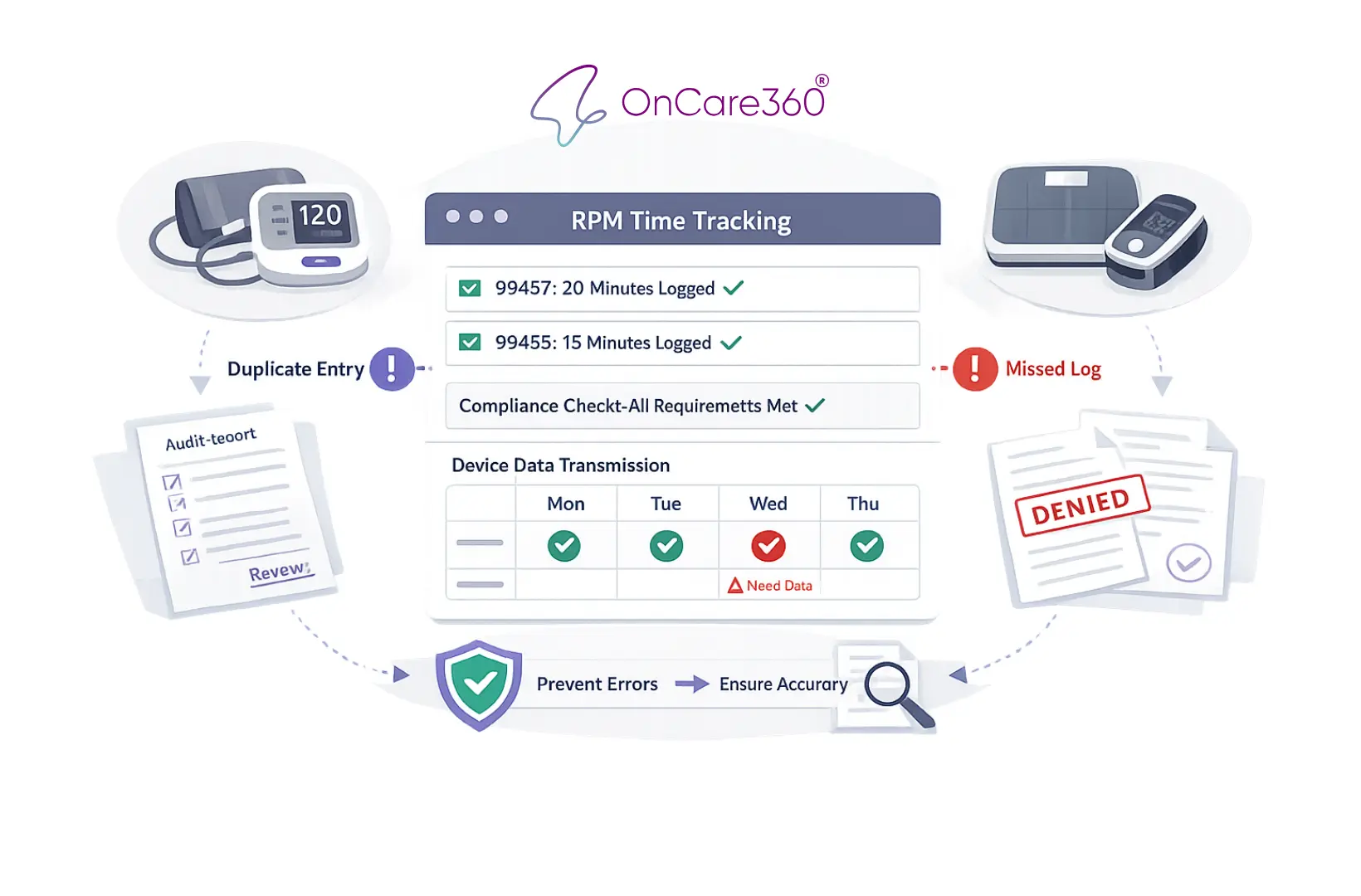
RPM Time Tracking Errors That Lead to Denials
Dec 31, 2025
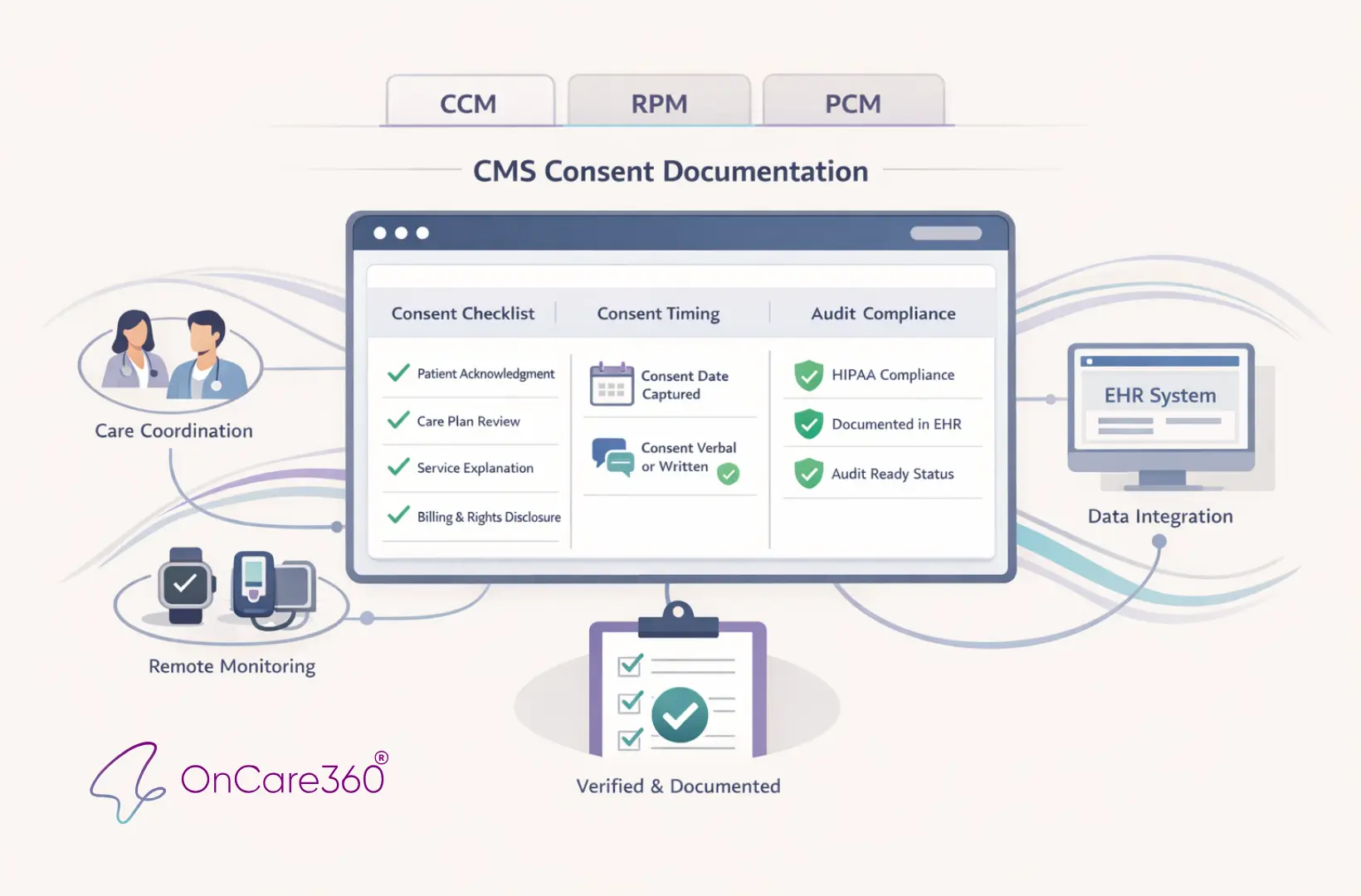
CMS Consent Documentation: What Must Be Captured
Jan 5, 2026
CMS Updates: How RPM is changing in 2026
Jan 3, 2026
How AI Expands Care Coordinator Capacity
Jan 1, 2026
RPM Time Tracking Errors That Lead to Denials
Dec 31, 2025
CMS Consent Documentation: What Must Be Captured
Dec 30, 2025
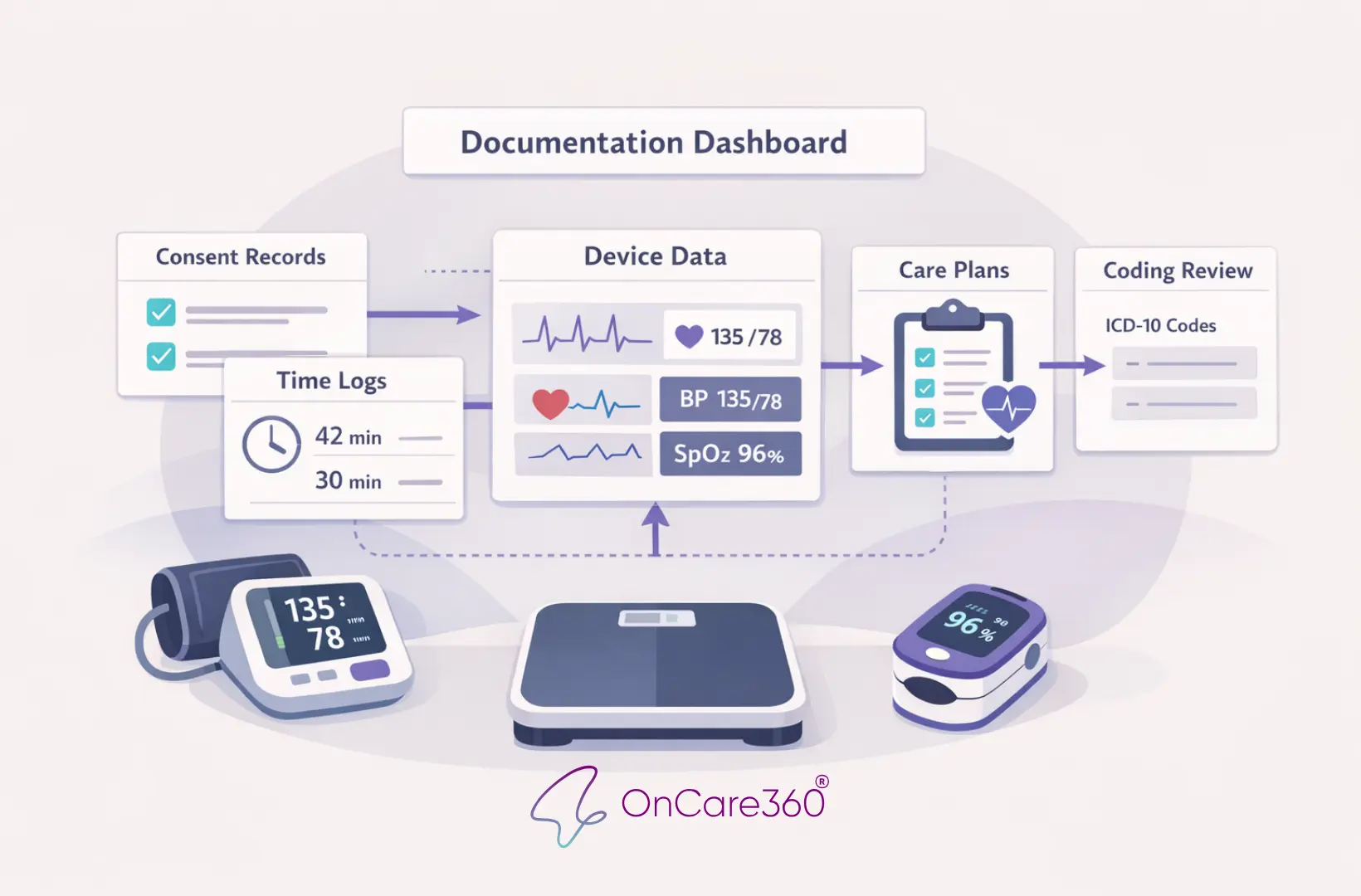
Top 10 Documentation Errors in CCM & RPM
Dec 29, 2025
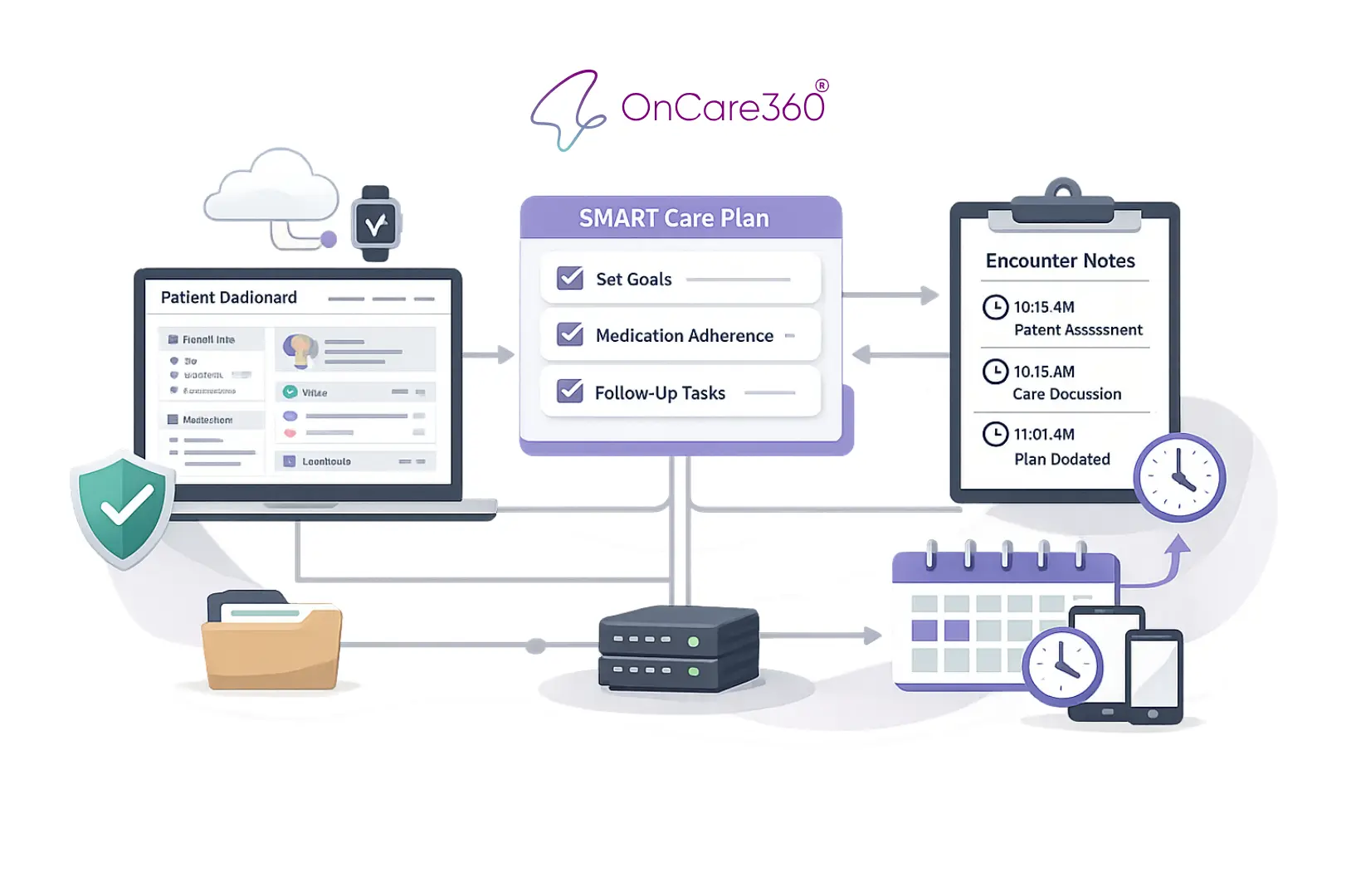
Audit-Ready Documentation: What CMS Expects
Jan 5, 2026
CMS Updates: How RPM is changing in 2026
Jan 3, 2026
How AI Expands Care Coordinator Capacity
Jan 1, 2026
RPM Time Tracking Errors That Lead to Denials
Dec 31, 2025
CMS Consent Documentation: What Must Be Captured
Dec 30, 2025
Top 10 Documentation Errors in CCM & RPM
Dec 29, 2025
Audit-Ready Documentation: What CMS Expects


Have questions?
Are you ready to explore the future of healthcare with OnCare360?
Contact us for more information or request a free consultation today.
Have questions?
Are you ready to explore the future of healthcare with OnCare360?
Contact us for more information or request a free consultation today.
Have questions?
Are you ready to explore the future of healthcare with OnCare360?
Contact us for more information or request a free consultation today.
Have questions?
Are you ready to explore the future of healthcare with OnCare360?
Contact us for more information or request a free consultation today.
Have questions?
Are you ready to explore the future of healthcare with OnCare360?
Contact us for more information or request a free consultation today.
Have questions?